Ellora Caves & Kailasa Temple
A multi-religious rock-cut landscape: from the resonant hall of Buddhist Cave 10 to the immense open court of Kailasa Temple.
Why we visited
Ellora formed the heritage part of our Grishneshwar day. We explored selected Buddhist, Hindu and Jain monuments with our daughters, aged 5 and 8, rather than attempting all 34 caves.
Historical context: three religious traditions in one complex
Historical context · sourced
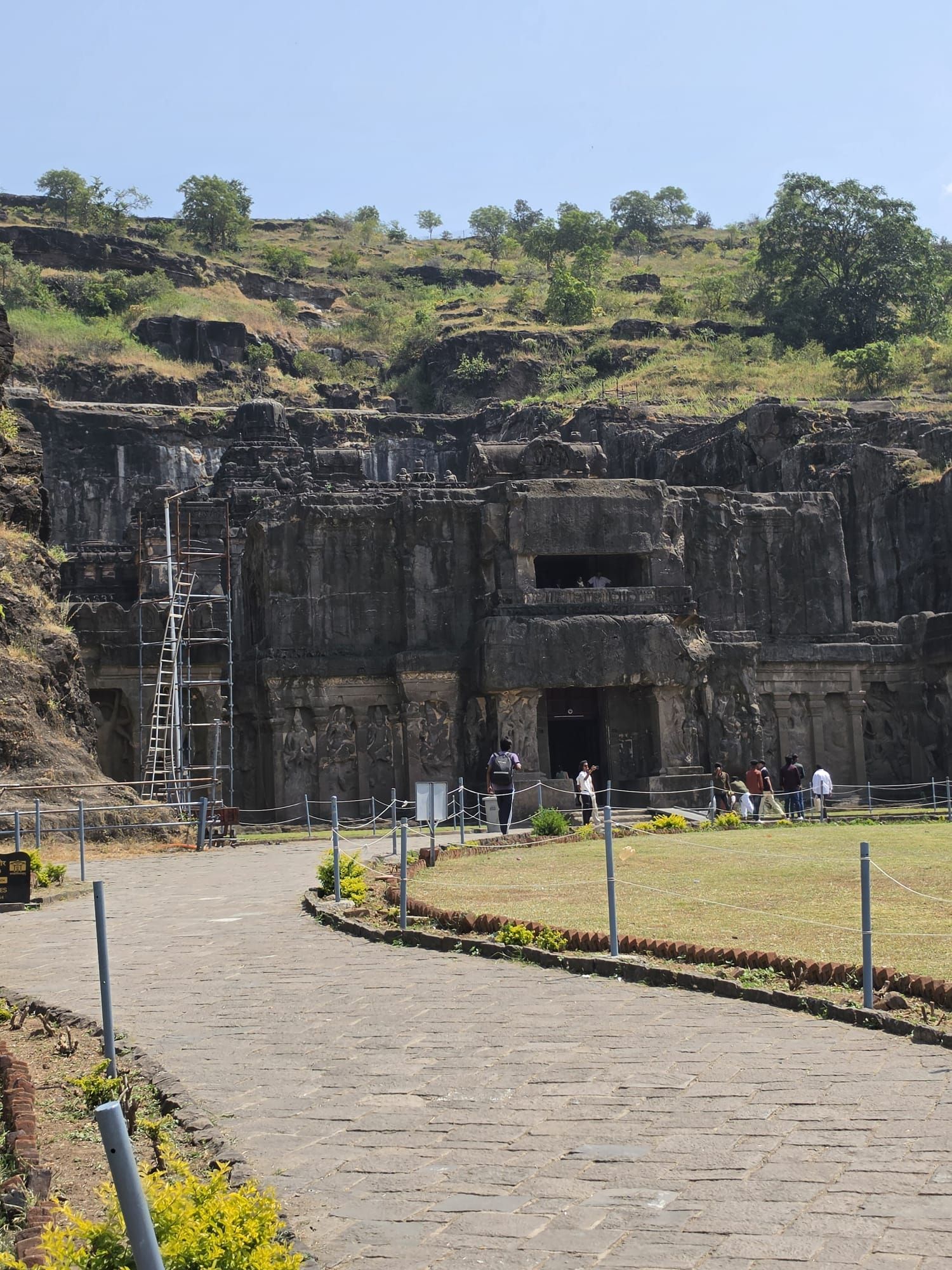
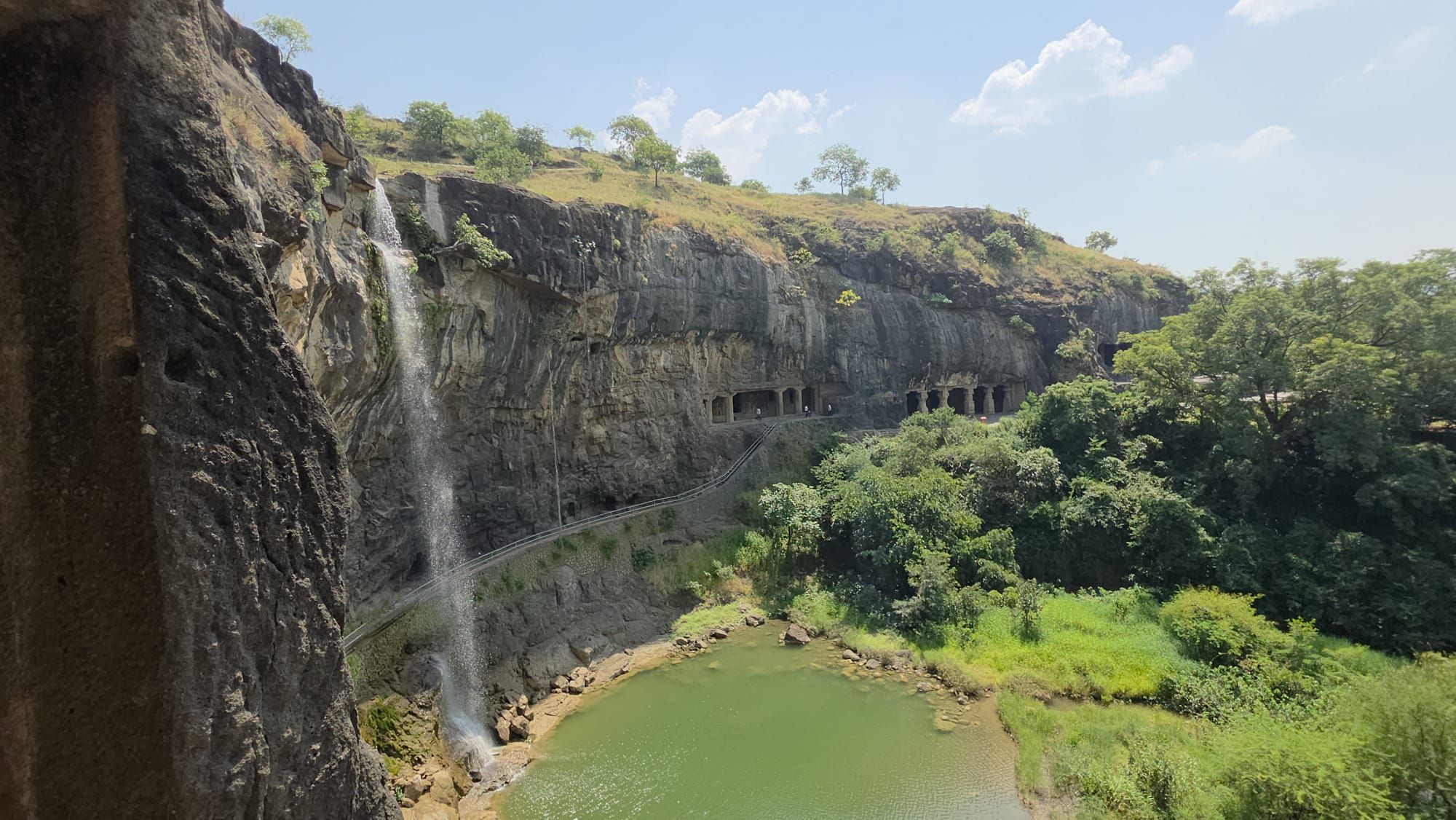
Ellora contains 34 monasteries and temples cut into a basalt cliff for more than two kilometres. The monuments represent Buddhism, Hinduism and Jainism side by side, which is central to UNESCO’s account of the site’s significance.
UNESCO dates the main rock-cut activity broadly from the 6th to the 12th centuries: Buddhist caves 1–12 form the earliest group, Hindu caves 13–29 include Kailasa, and Jain caves 30–34 belong to the last phase. This chronology is sourced history; the sections labelled as our experience describe only our October 2026 visit.
The long cliff and separated Jain group matter practically: Ellora is a landscape of monuments, not one enclosed building. Our wide photograph shows that setting; the chronology here comes from UNESCO, not from visual guesswork.
Sources for this section
- UNESCO World Heritage Centre — Ellora Caves — World Heritage description, chronology, religious groups, Cave 10 and Kailasa context.
- Maharashtra Department of Tourism — Ellora — Official state overview of the cave complex and Kailasa Temple.
After our Grishneshwar morning
First-hand journeyOur October 2026 experience
We began the day at Click Hotel in Chhatrapati Sambhajinagar, left around 08:00 and visited Grishneshwar before continuing to Ellora. Our temple morning and cave visit formed two parts of the same day.
Historical context: Cave 10
Historical context · sourced
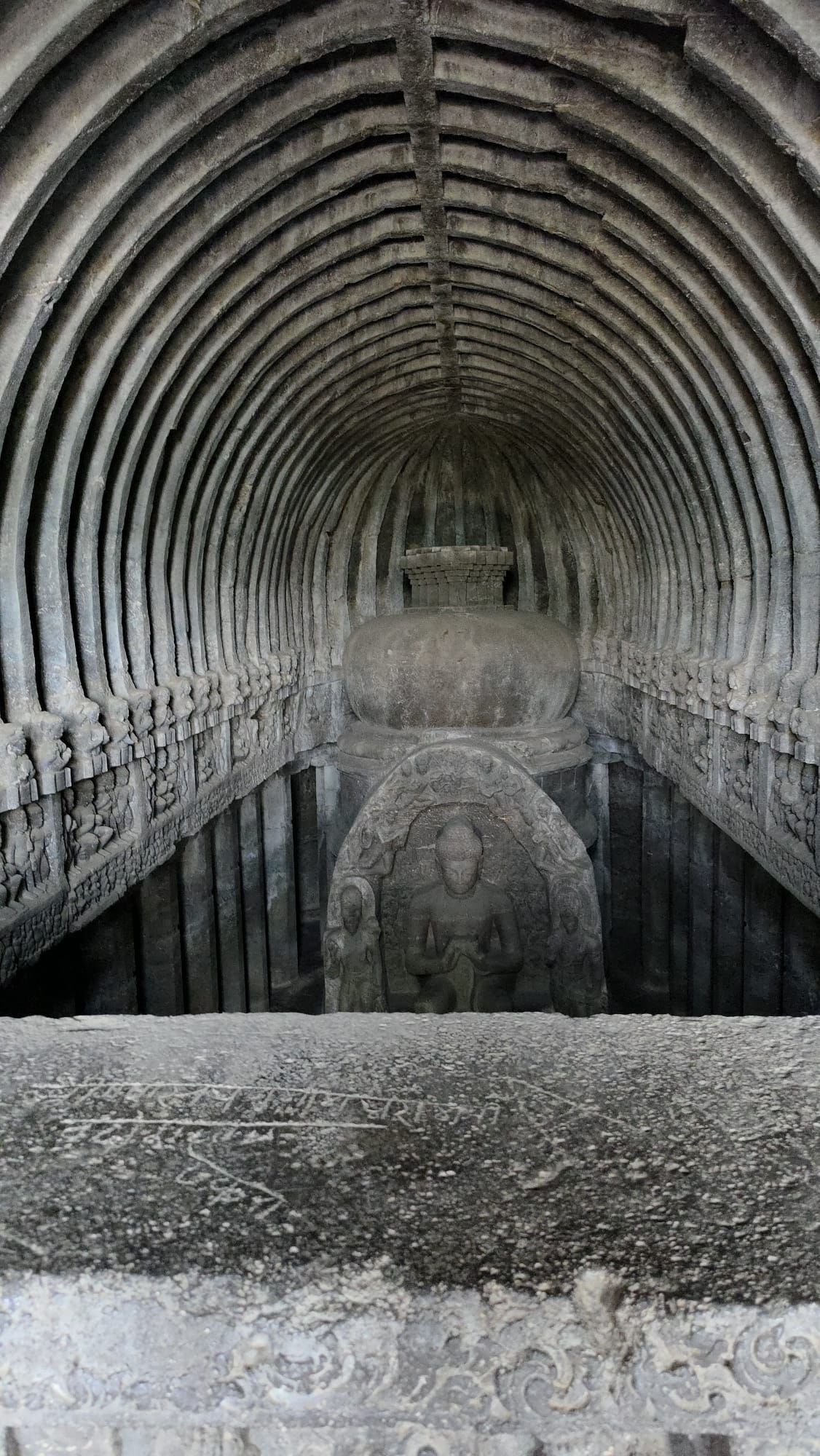
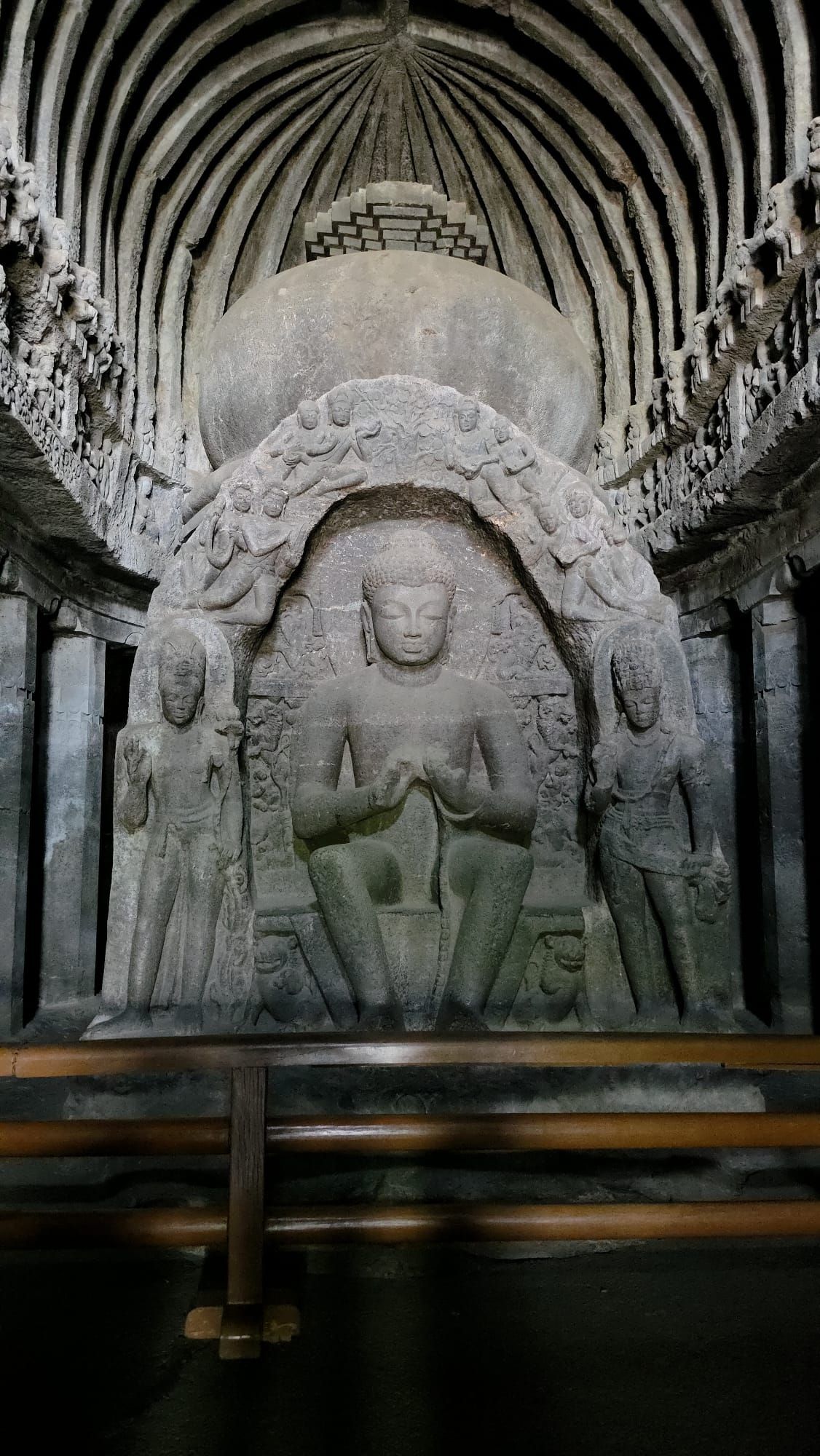
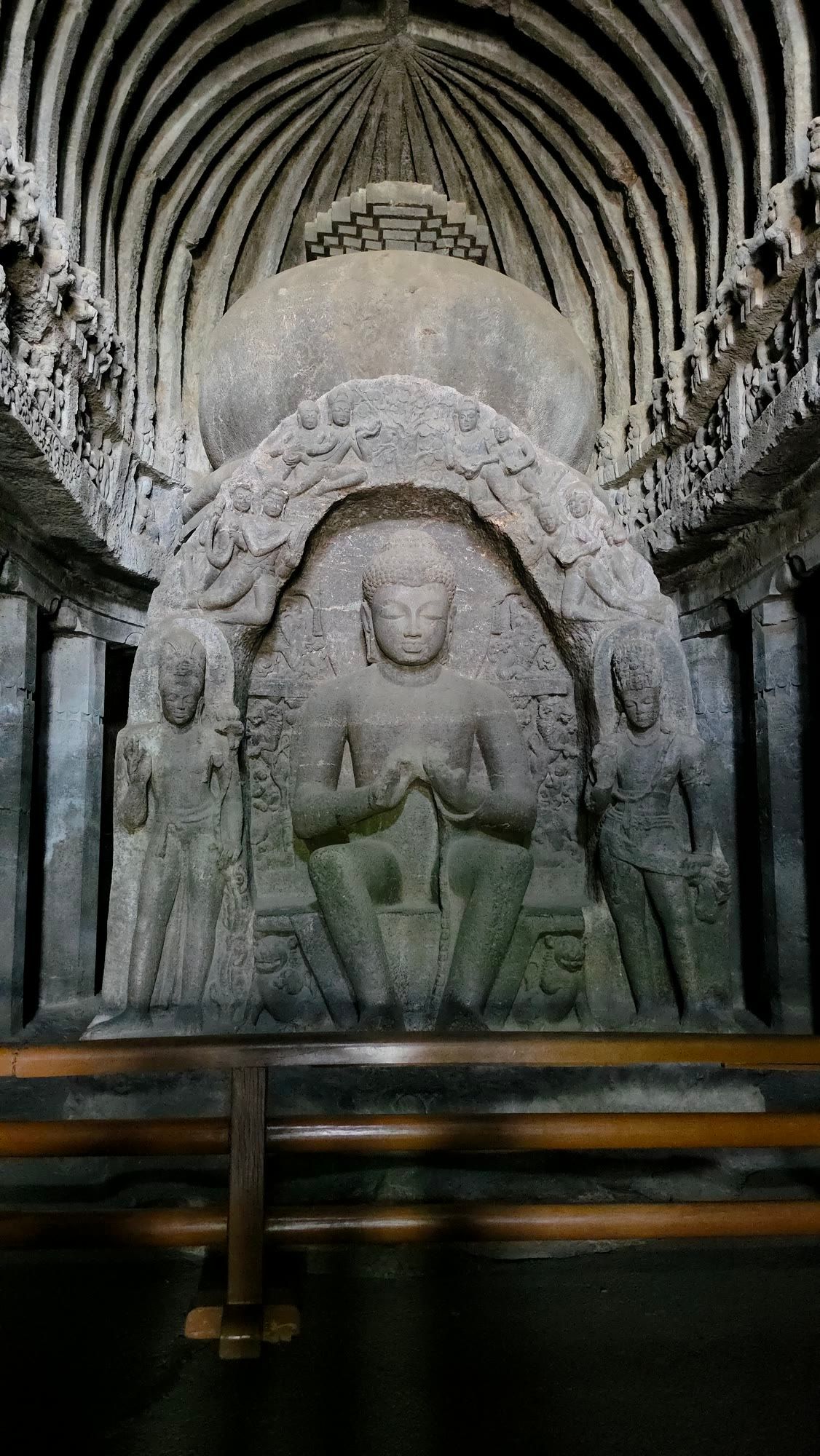
Cave 10 is the Buddhist chaitya hall known as Vishvakarma, or the Carpenter’s Cave. UNESCO singles it out as one of Ellora’s important Buddhist monuments. Its apsidal hall focuses on a seated Buddha before a stupa, beneath a vaulted ceiling carved with stone ribs.
The old guide supplied by the owner also describes the ribs as recalling timber construction, which helps explain the popular name “Carpenter’s Cave”. We use the scan as orientation only and rely on UNESCO for the historical classification.
Sources for this section
- UNESCO World Heritage Centre — Ellora Caves — World Heritage description, chronology, religious groups, Cave 10 and Kailasa context.
Our Cave 10 experience: ceiling, Buddha and echo
First-hand journeyOur October 2026 experience
Cave 10’s Buddhist prayer-hall setting, seated Buddha and ribbed ceiling stayed with us. To our family, the ceiling had an “elephant-ribs” appearance. The acoustics and the echo of chanting were memorable.
“Elephant ribs” was our family’s visual comparison for the ceiling, not a historical or architectural name. The echo is our remembered experience of chanting in the hall, not an acoustic measurement or a claim about the cave’s original design purpose.
What our visit and media confirm
First-hand journeyOur October 2026 experience
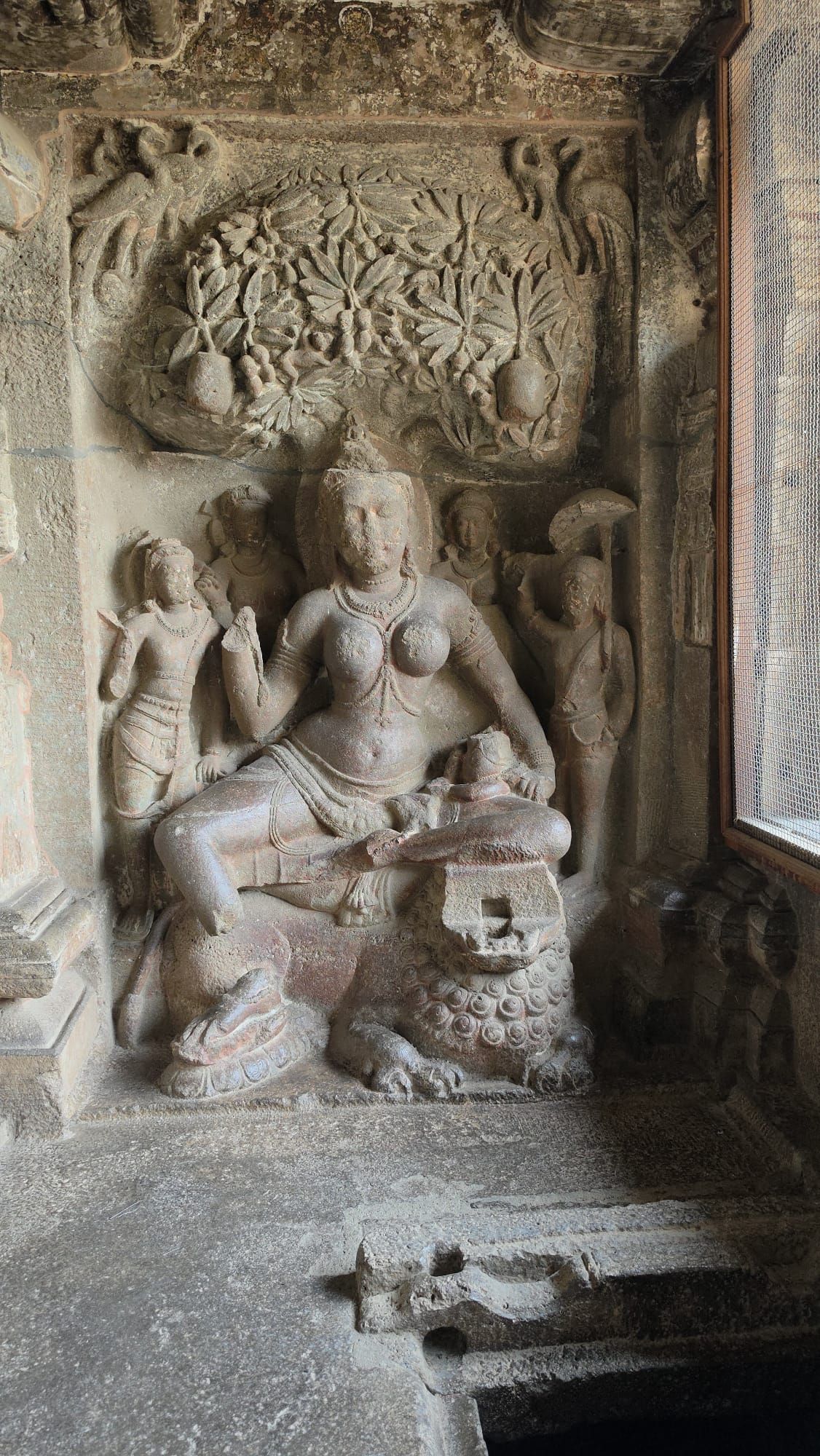
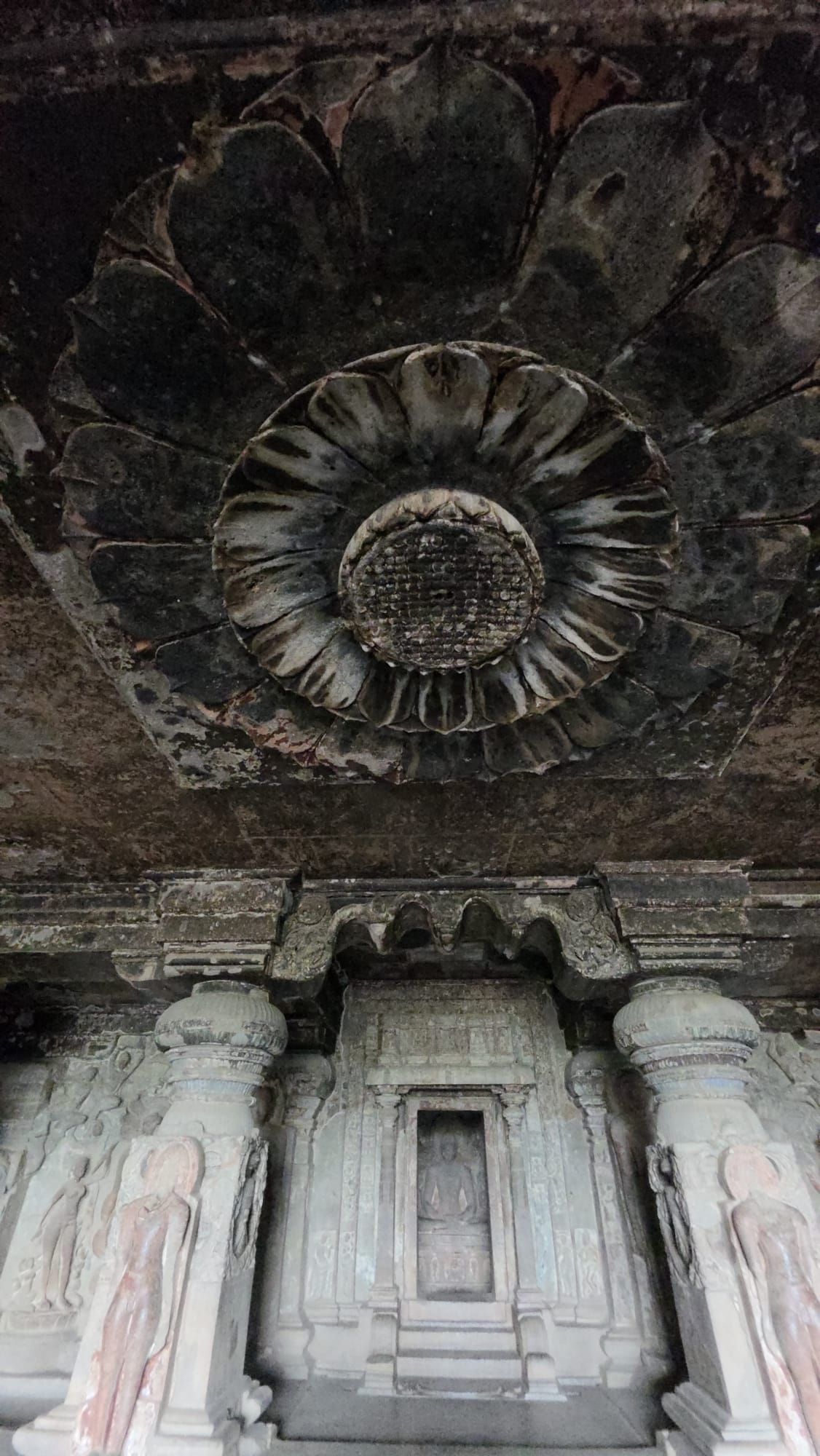
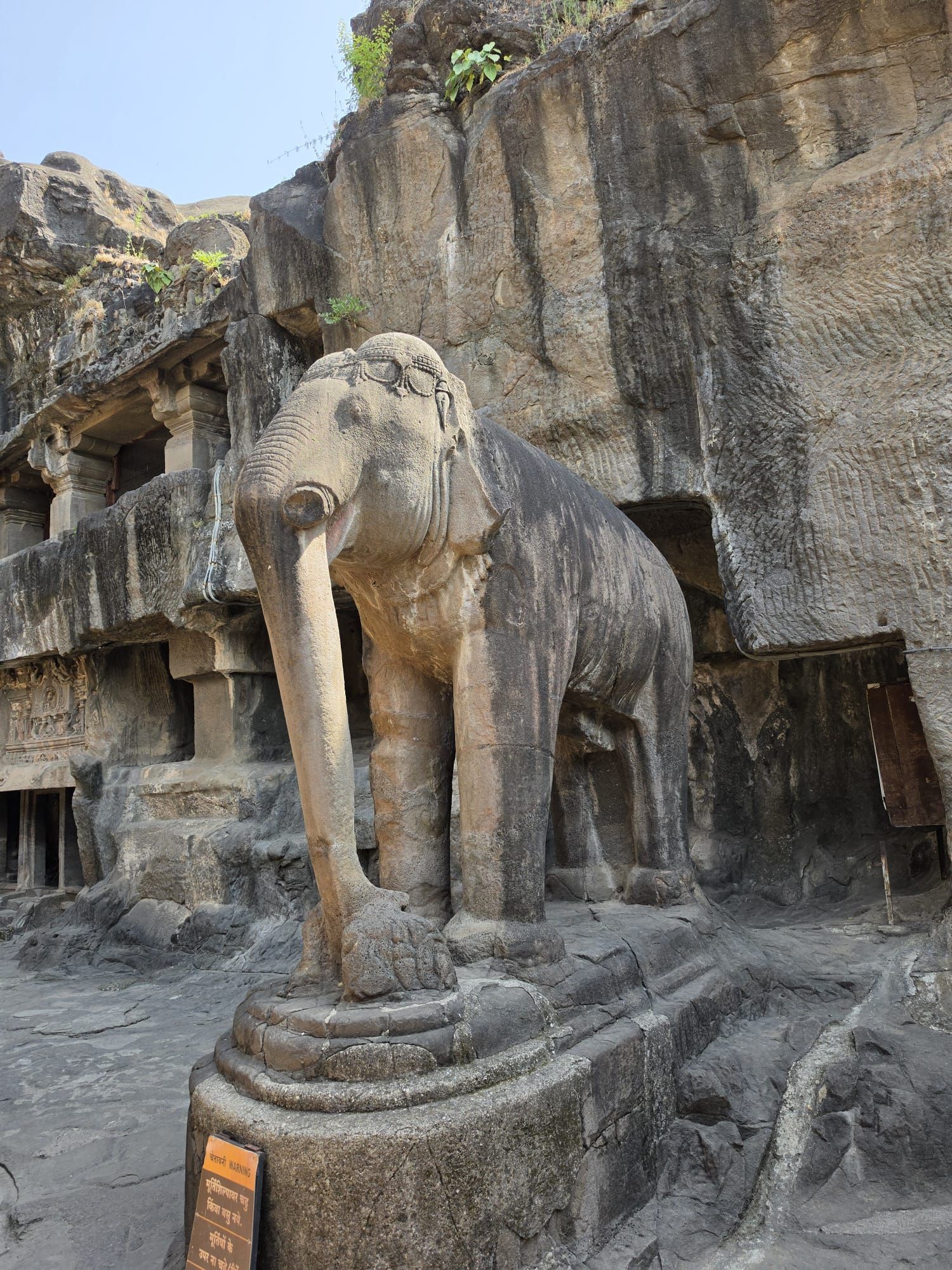
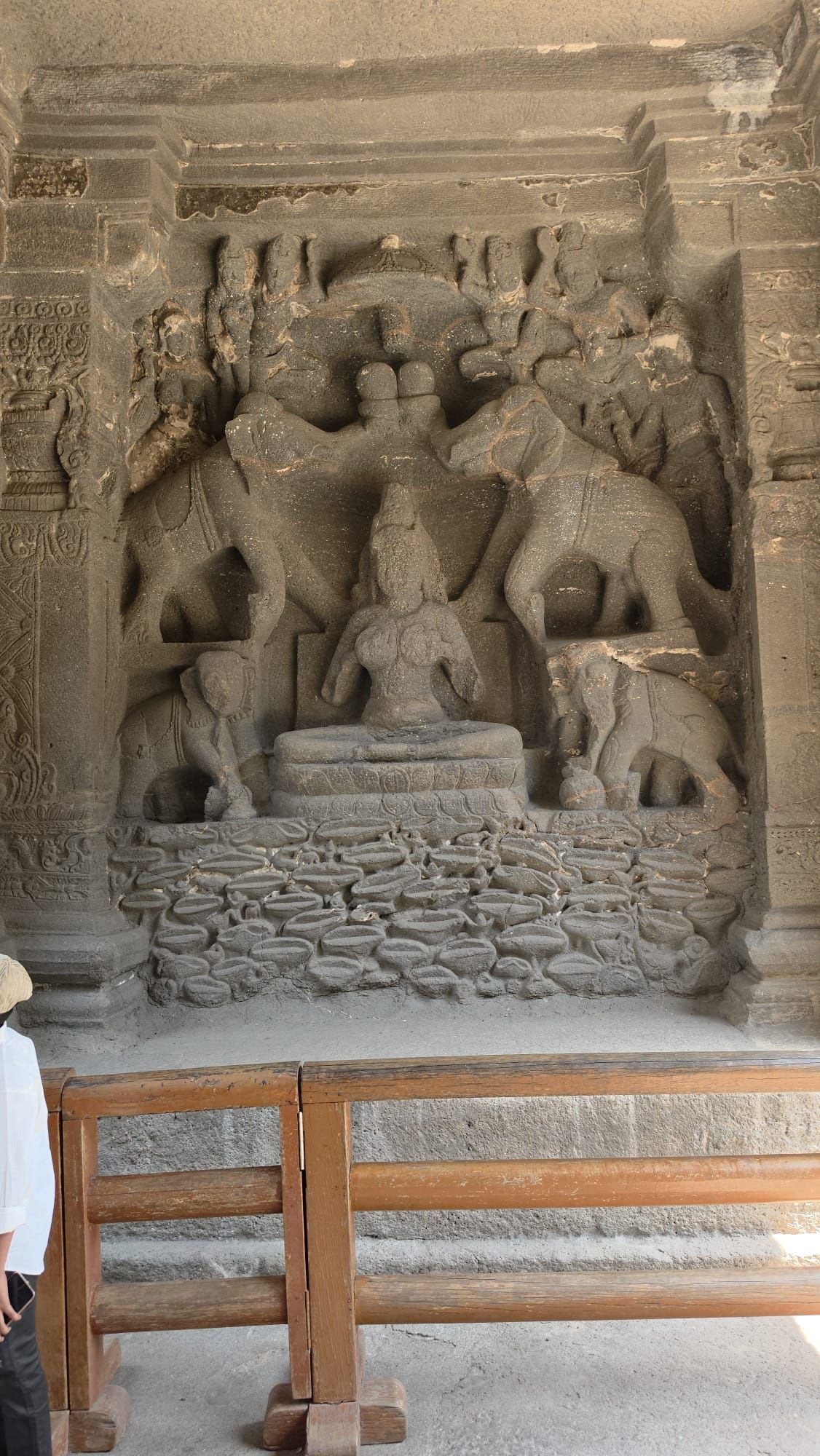
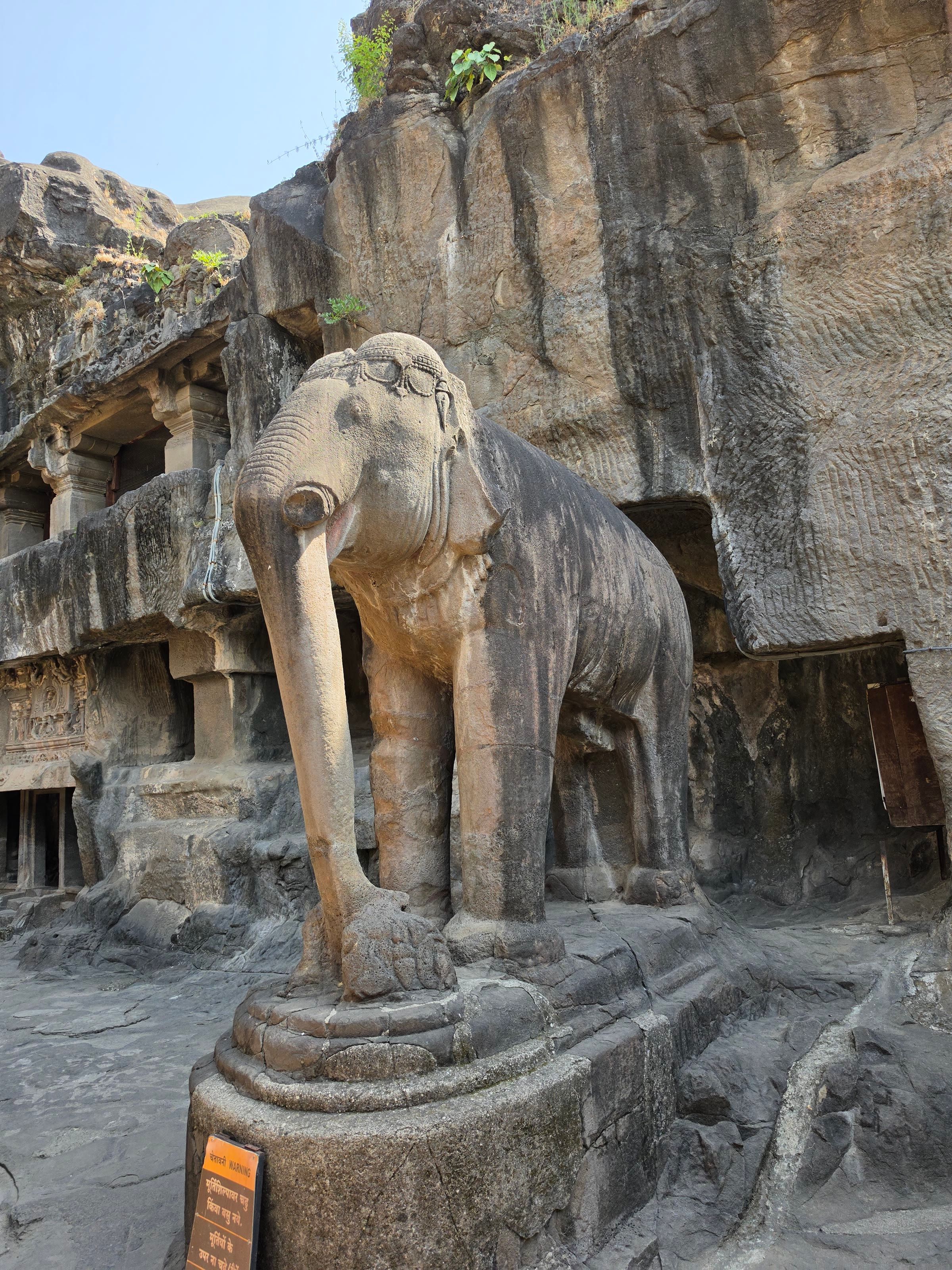
Alongside Cave 10 and Kailasa, our photographs and a 27-second video record that we also explored part of Ellora’s Jain group. The media shows carved figures, a lotus ceiling and a rock-cut elephant. We have not assigned an exact route or individual Jain cave numbers because those details were not recorded in our notes.
That evidence adds to the visit record without turning it into a claim that we covered all three groups comprehensively.
Reading Ellora’s sculpture carefully
Historical context · sourced
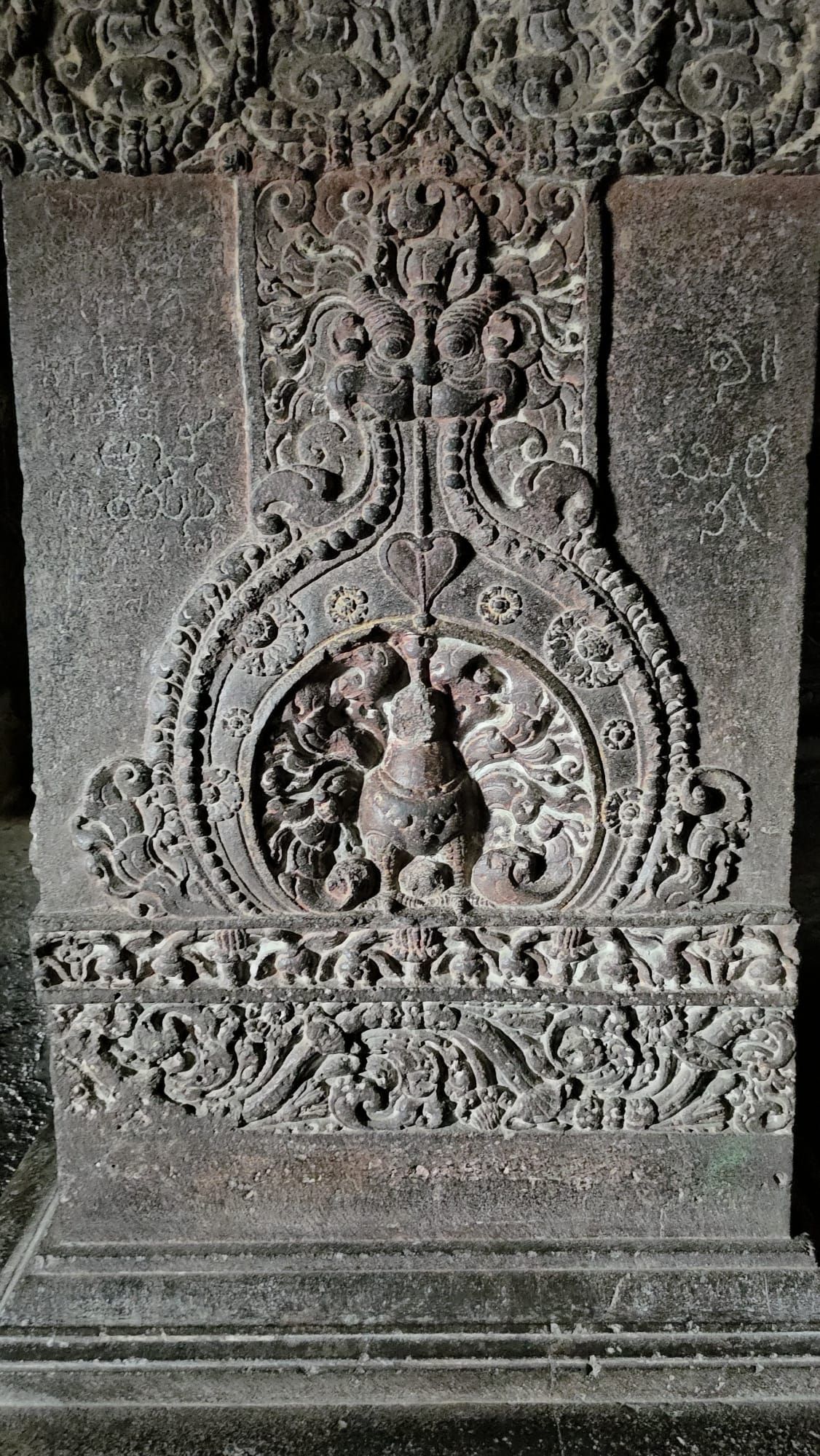
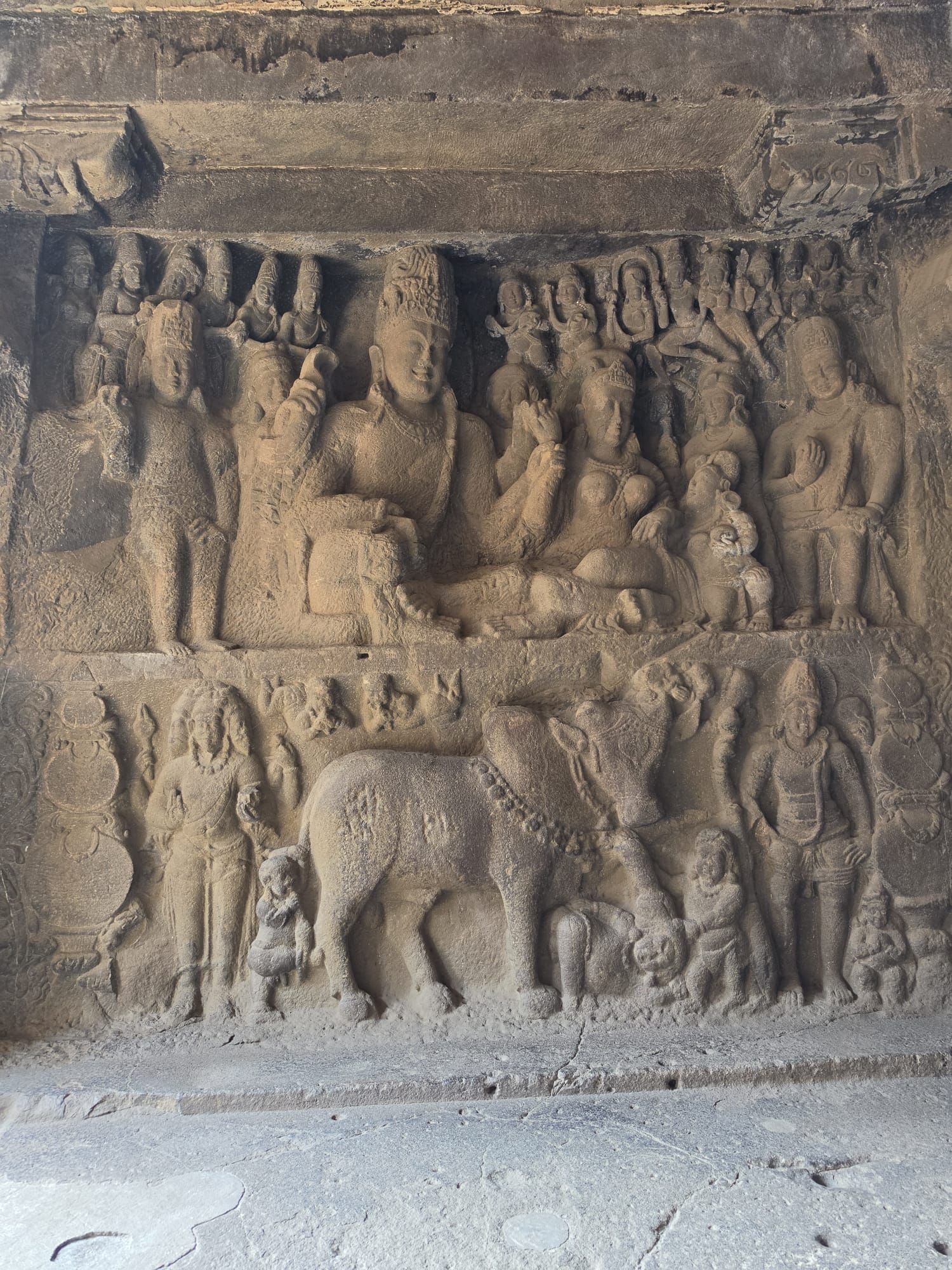
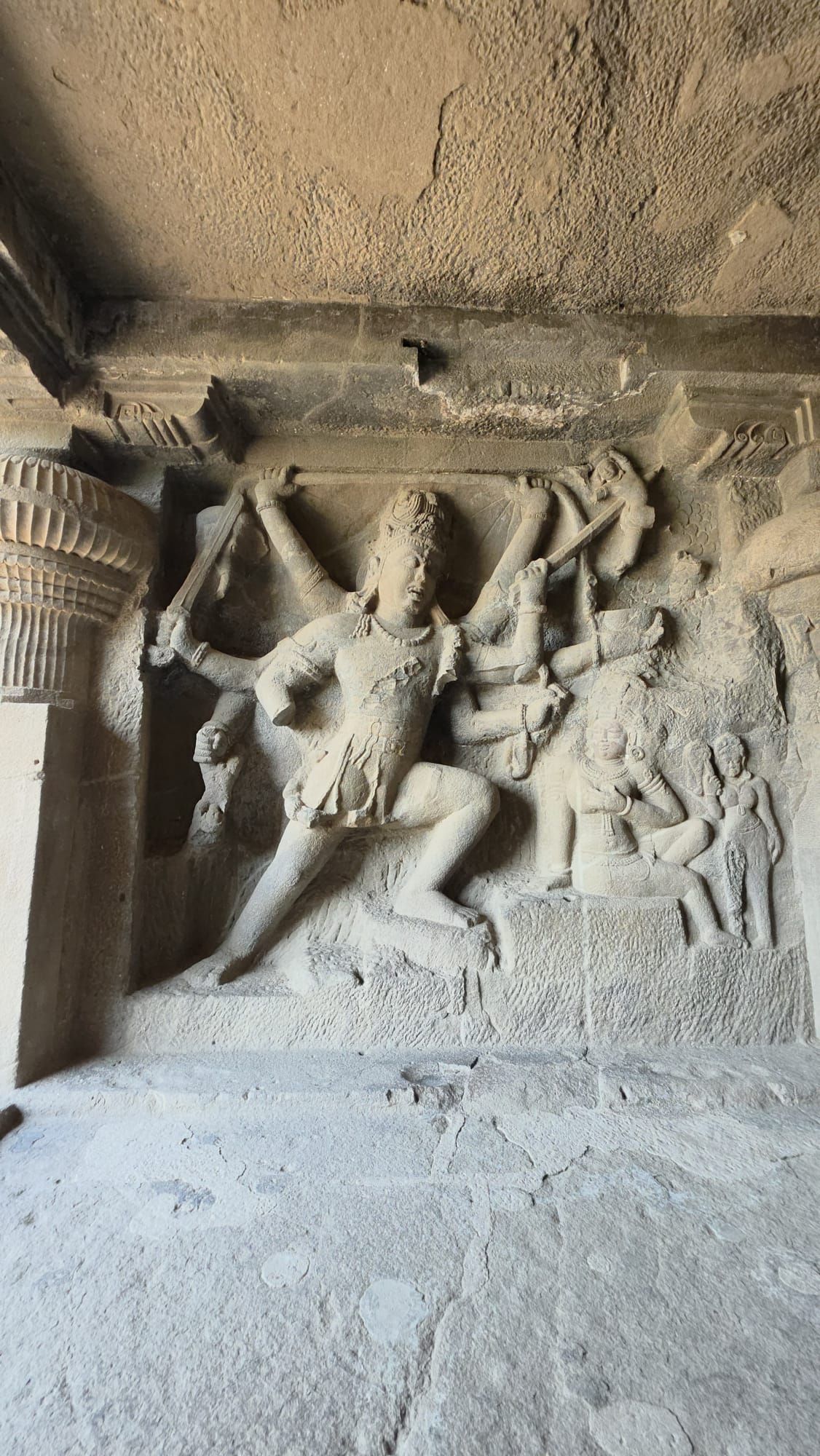
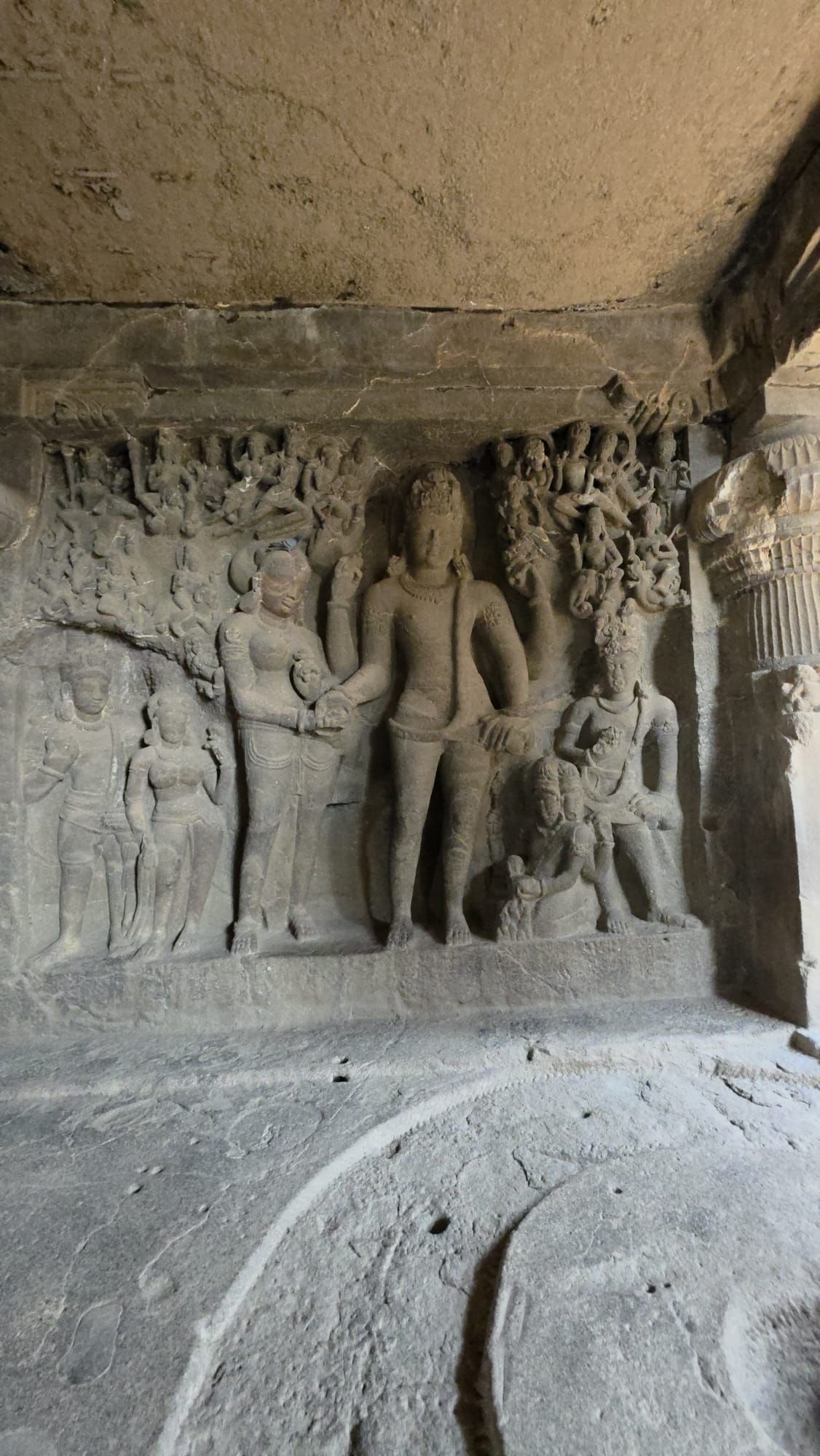
Across the Hindu and Jain groups, sculpture is integrated with pillars, walls, shrines and courts rather than displayed as separate museum objects. UNESCO particularly notes the bold sculptural programme at Kailasa and the fine carving of the Jain monuments.
Our photographs include several panels whose exact cave number and narrative identity were not recorded. Their captions therefore describe only what is visible instead of assigning unsupported names.
Sources for this section
- UNESCO World Heritage Centre — Ellora Caves — World Heritage description, chronology, religious groups, Cave 10 and Kailasa context.
- Maharashtra Department of Tourism — Ellora — Official state overview of the cave complex and Kailasa Temple.
The caves we chose to skip
Historical context: Kailasa Temple
Historical context · sourced
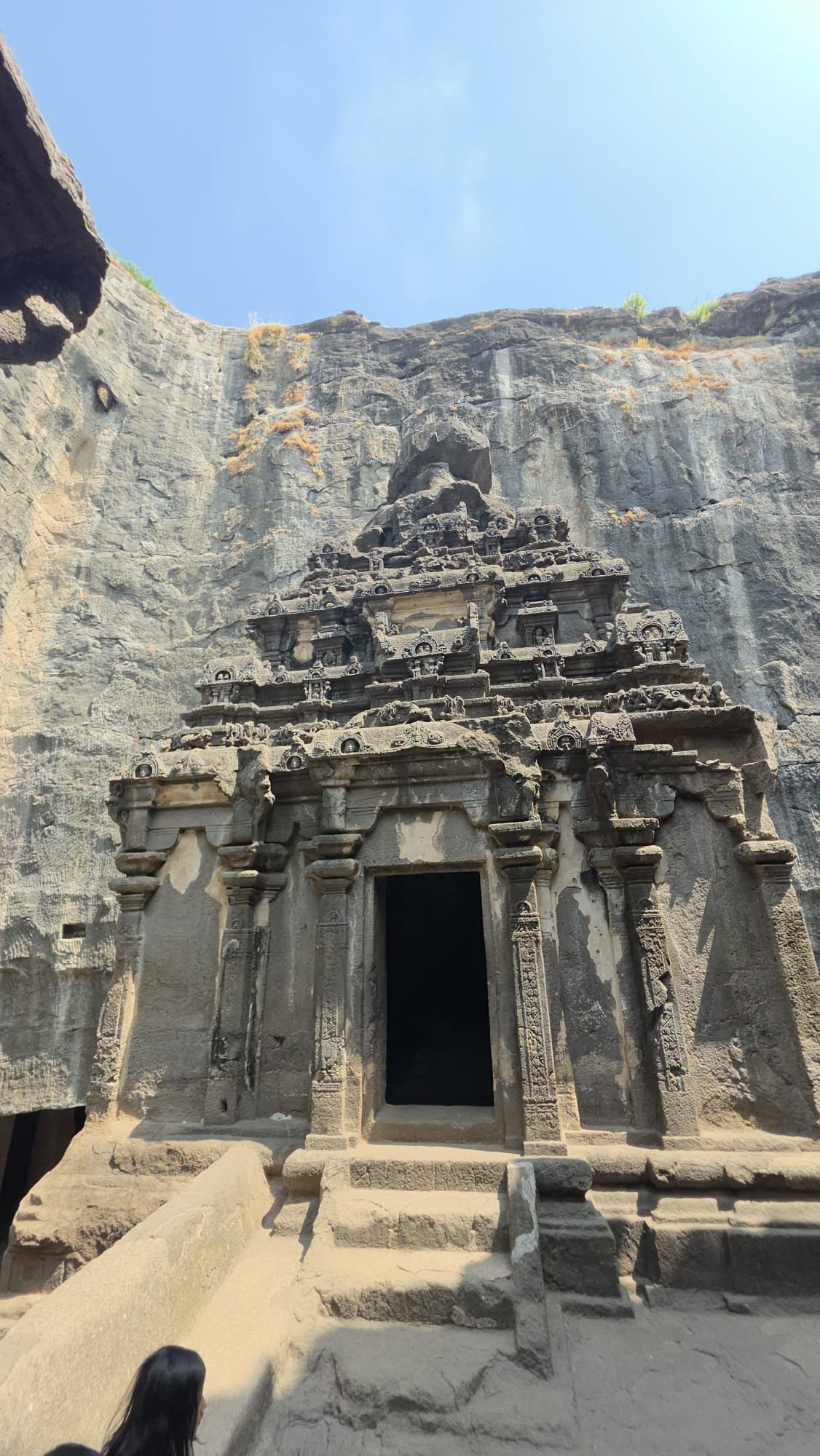
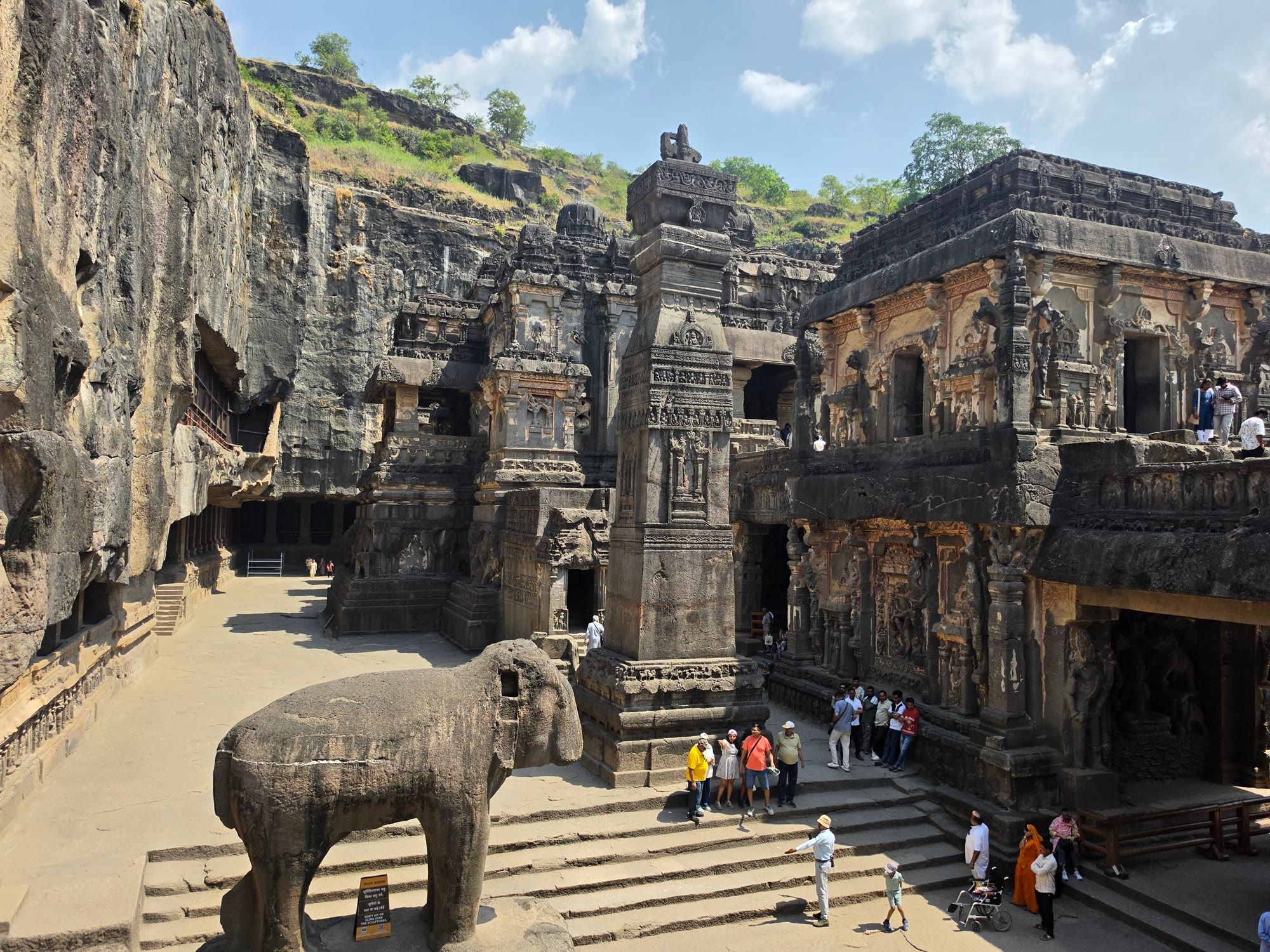
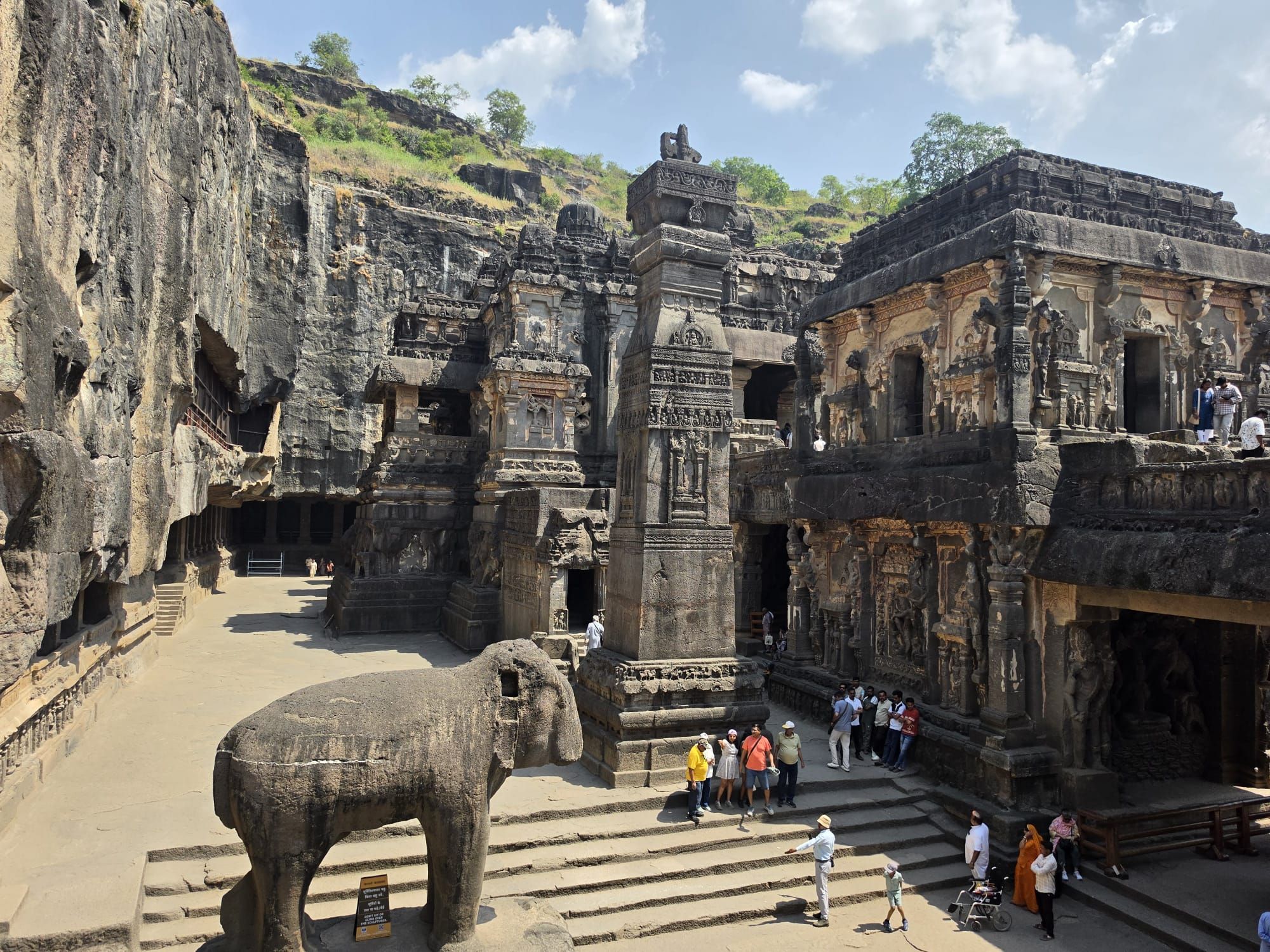
Kailasa Temple is Cave 16, within Ellora’s Hindu group. UNESCO describes it as the largest monolithic temple and a culmination of Indian rock-cut architecture, with the temple complex, courts and sculptural programme excavated from the living rock.
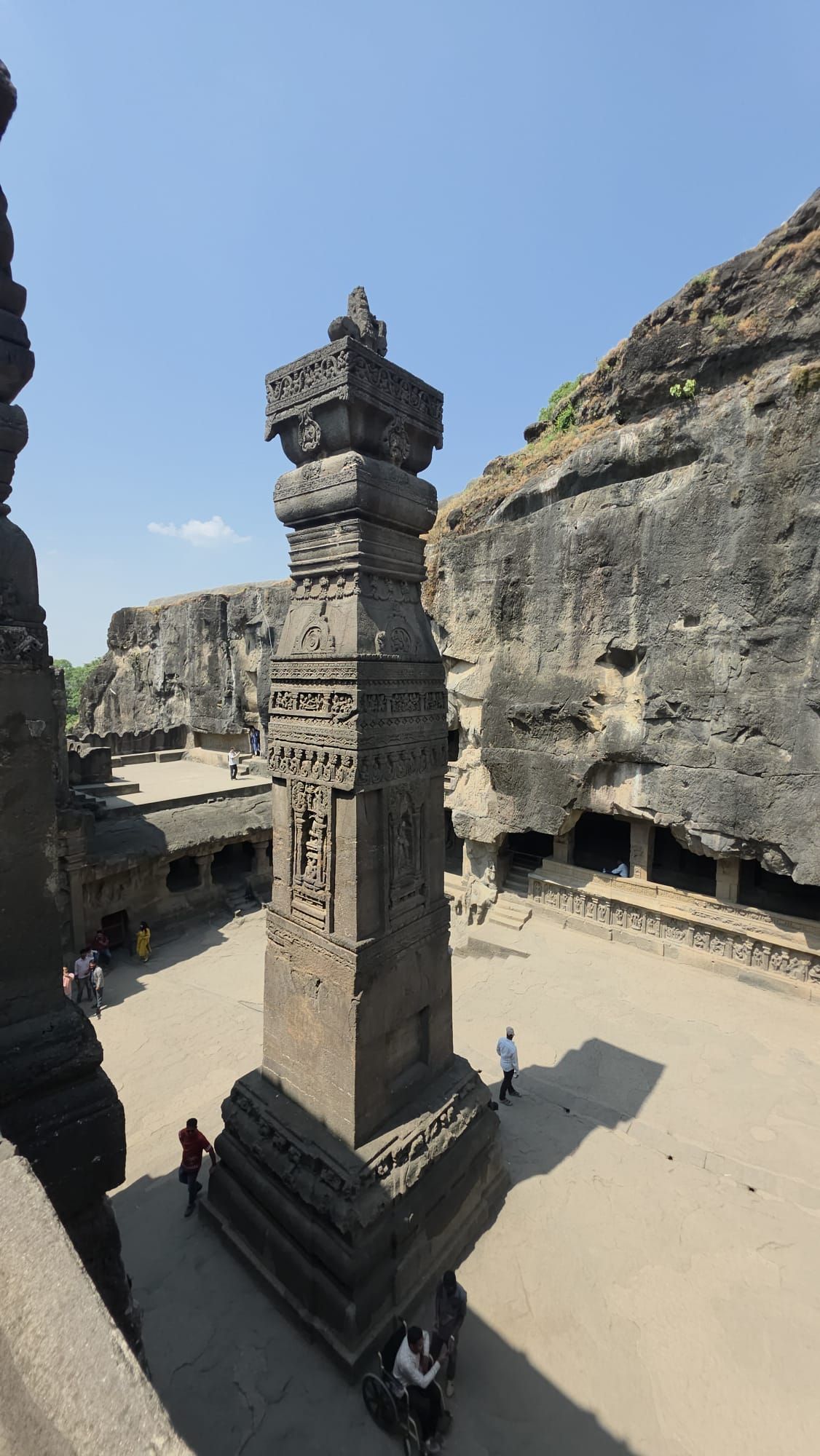
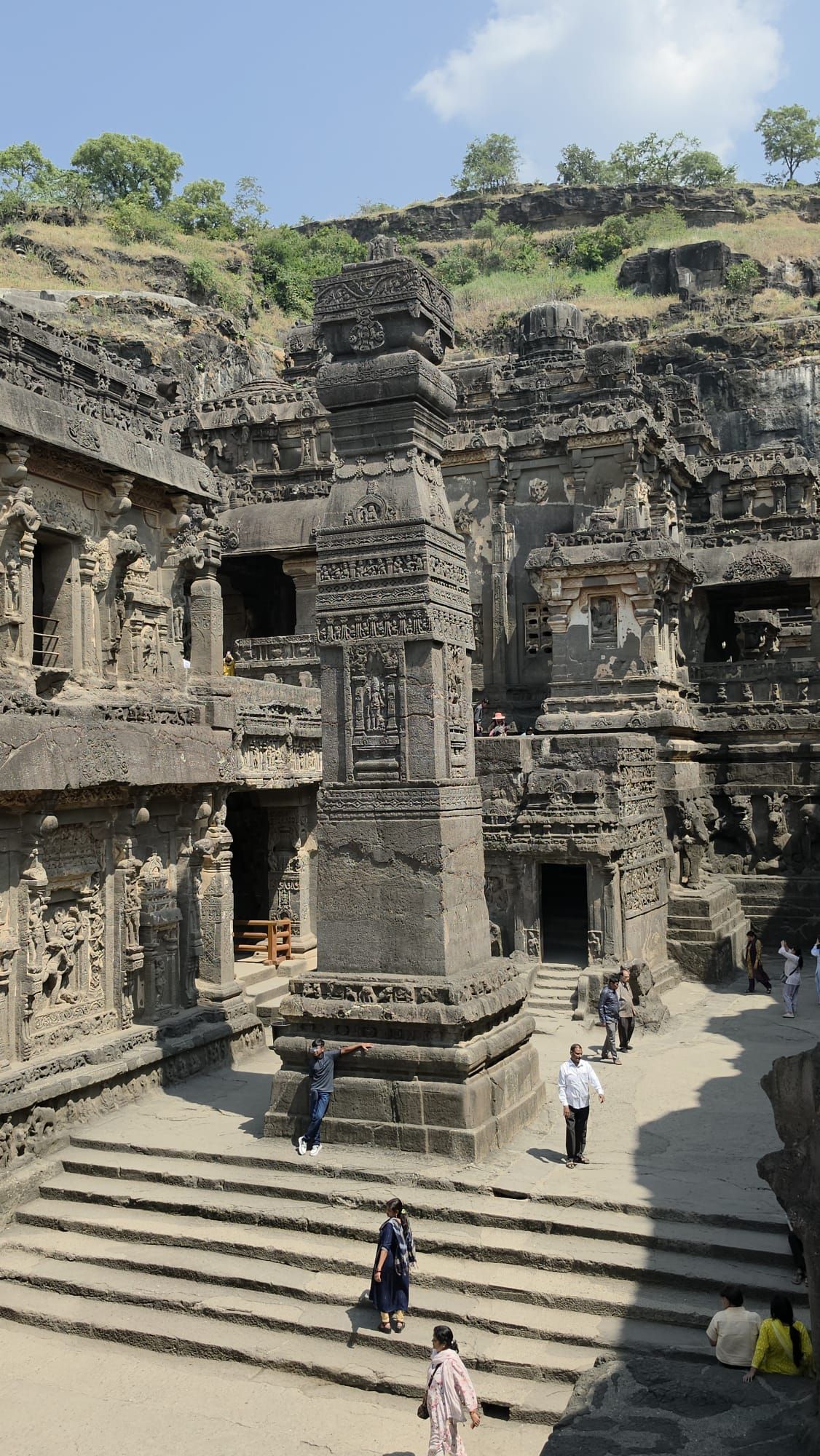
Its open court, monumental elephants, victory pillars and temple forms make it feel constructed, even though the ensemble was excavated from rock. UNESCO also singles out the panel of Ravana attempting to lift Mount Kailasa.
Sources for this section
- UNESCO World Heritage Centre — Ellora Caves — World Heritage description, chronology, religious groups, Cave 10 and Kailasa context.
- Maharashtra Department of Tourism — Ellora — Official state overview of the cave complex and Kailasa Temple.
Our experience of Kailasa Temple
First-hand journeyOur October 2026 experience
We then proceeded to Kailasa Temple, also written Kailasha. It was a major visual and architectural highlight of our Ellora visit.
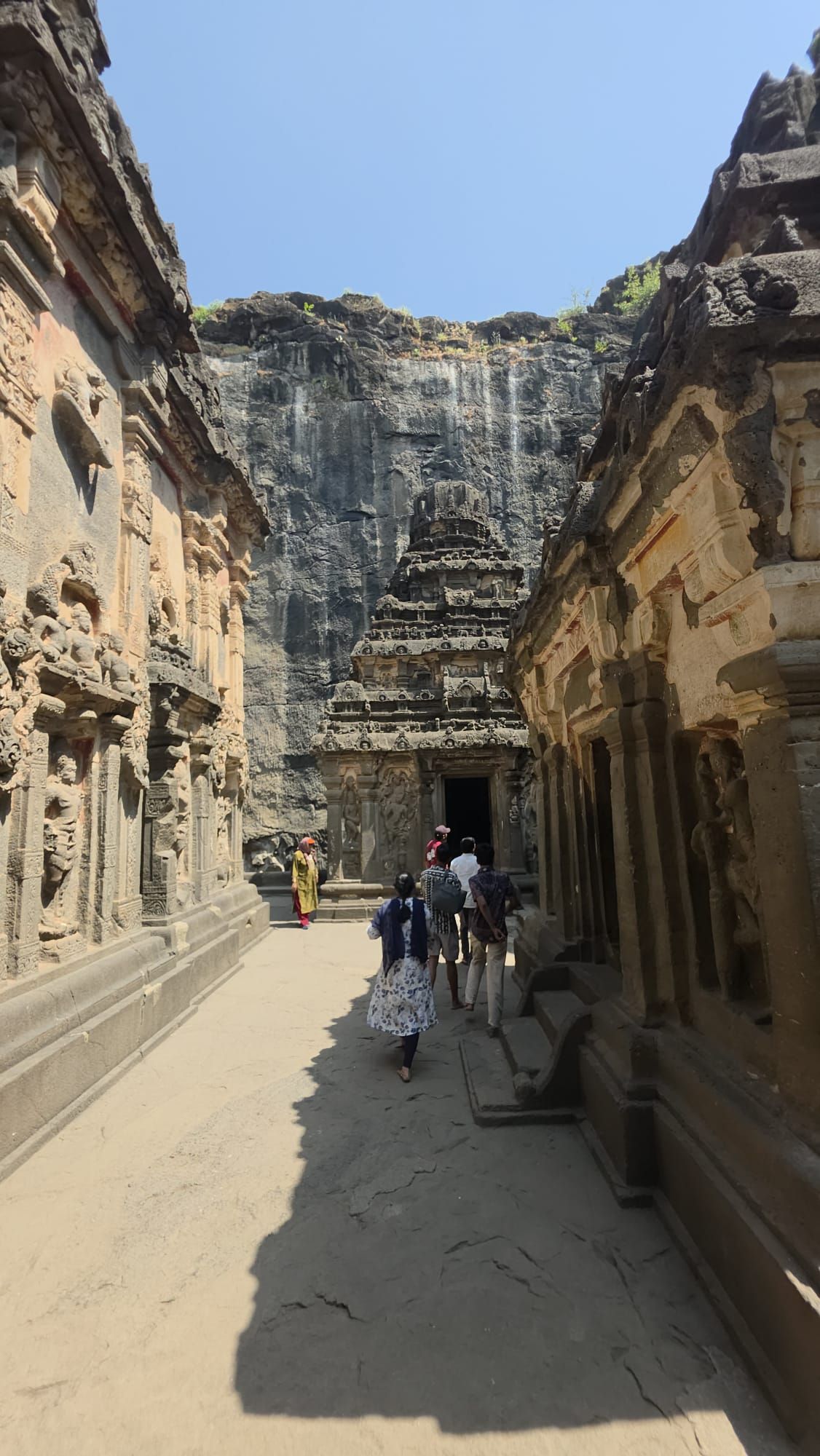
Our photographs show the open court, free-standing temple forms, carved walls and monumental elephants against the exposed cliff. The scale was easier to grasp by moving through the court than from a single viewpoint.