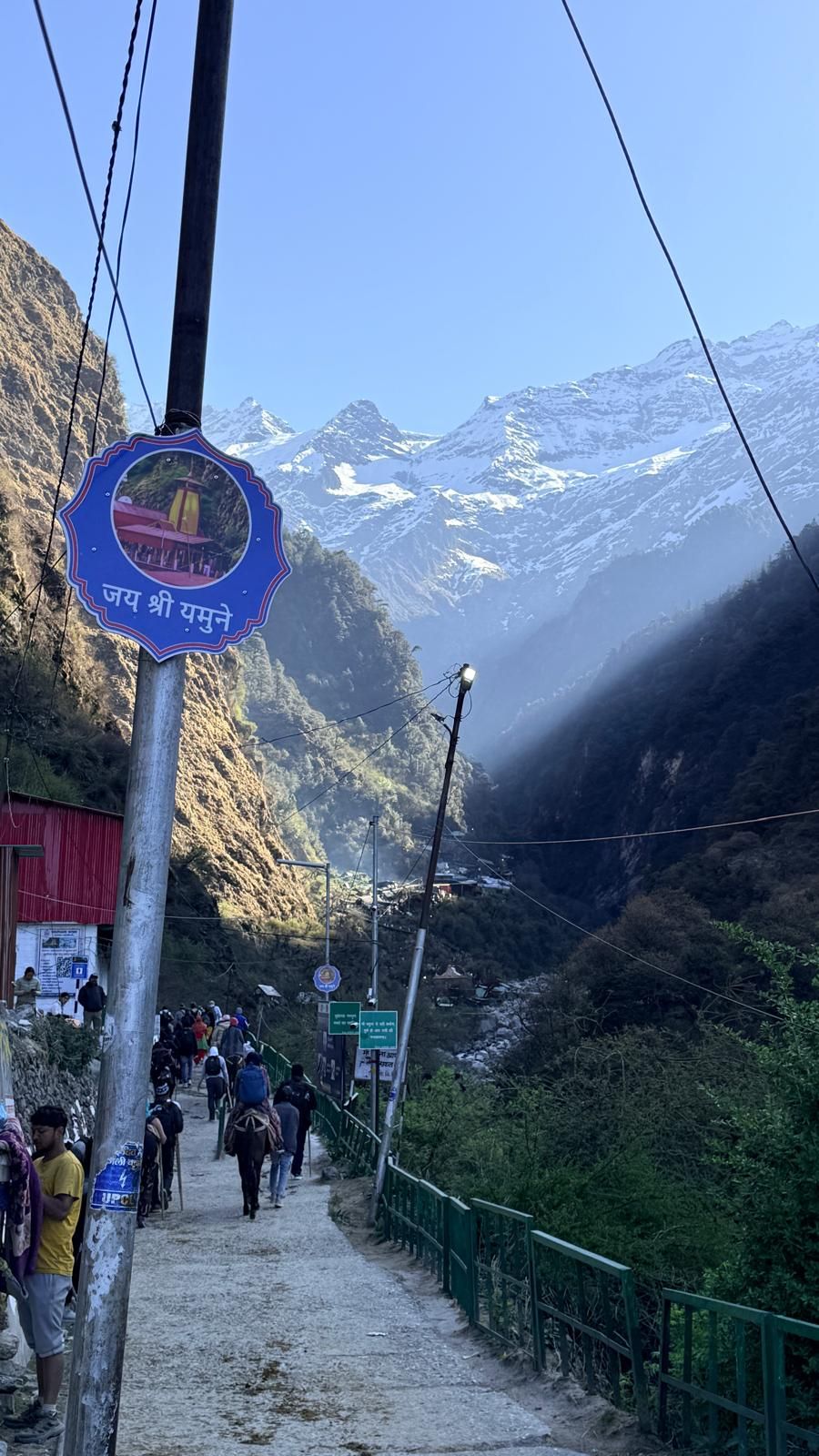
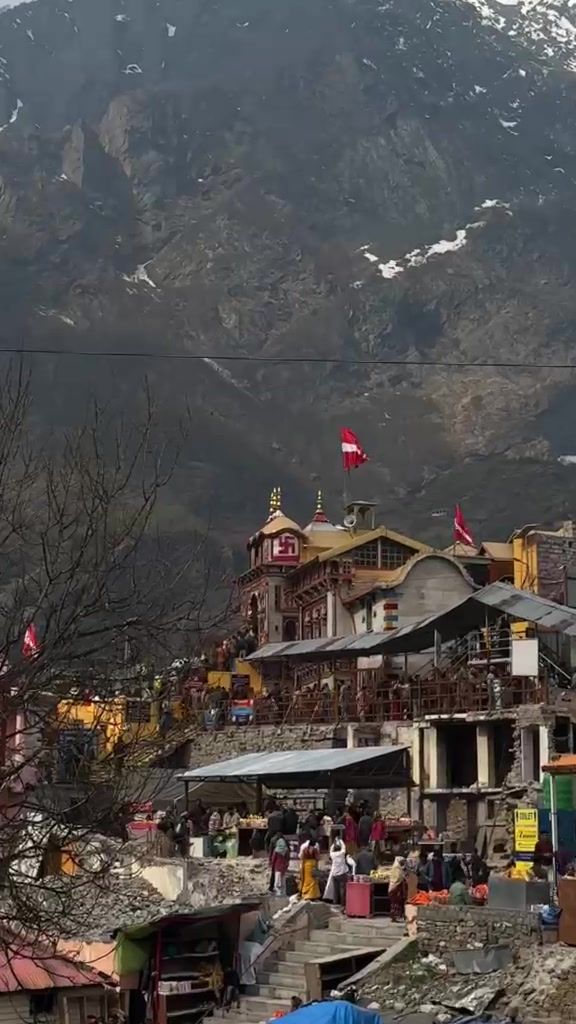
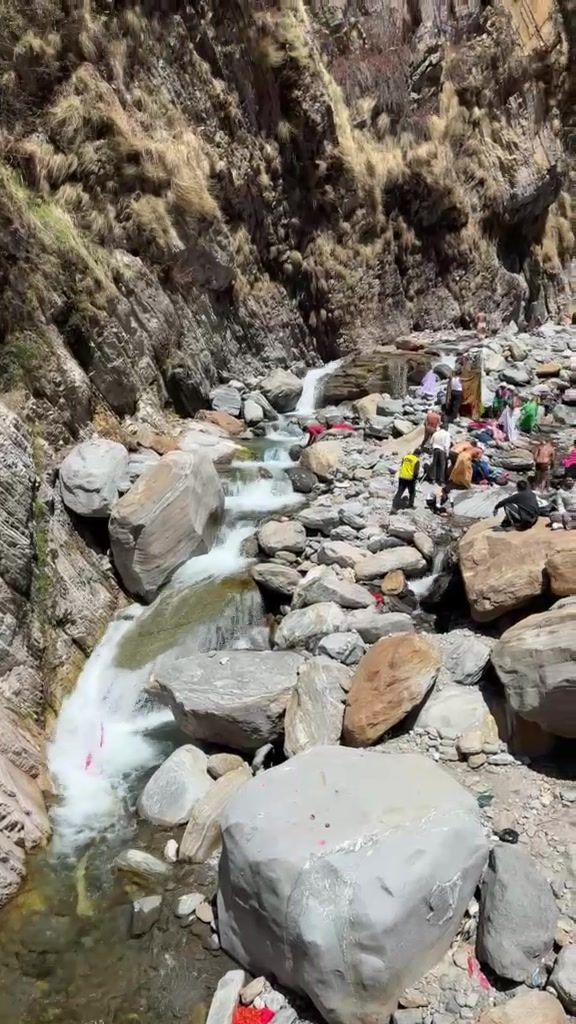
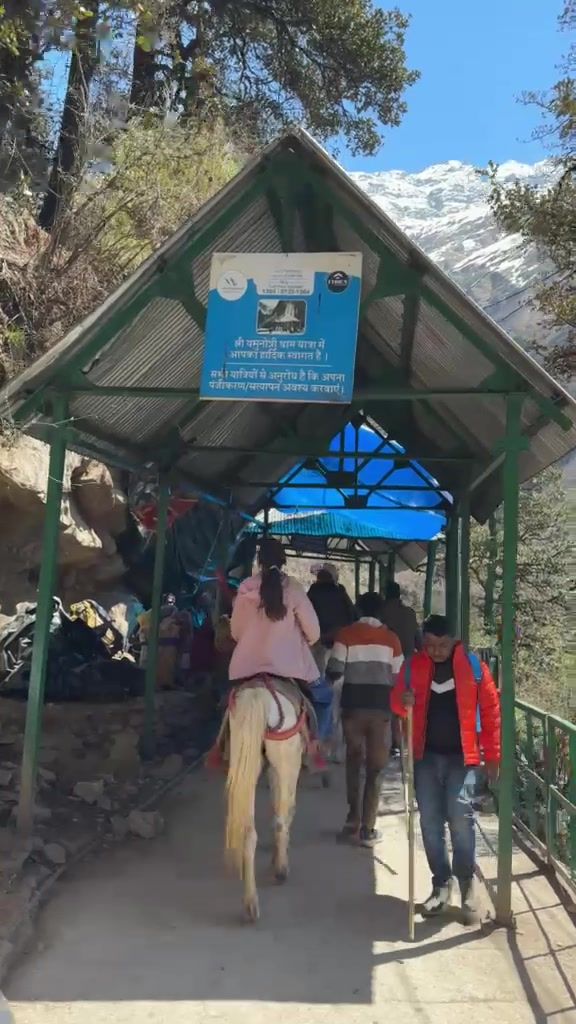
Our Yamunotri visit was a day trip from Barkot. The climb, rather than the time inside the temple, shaped the day.
Our base
Monkey Trail, Barkot, for two nights.
Road-to-trek transfer
We drove to Janki Chatti, then continued on the walking route.
Our uphill walk
About 6 km and approximately 3 hours for the adults; allow separately for descent, darshan and breaks.
Children’s transport
Both children went up and down by pitthu; approximately ₹7,000 total as remembered from April 2026.
How long did the Yamunotri trek from Janki Chatti take?
In April 2026, the two adults took approximately three hours uphill on the route we remember as about 6 km each way. Both children travelled by pitthu. Three hours was our uphill walking time, not the total outing: the temple visit, puja, breaks, descent and road transfers were additional. We did not record the temple queue duration.
This account covers the pilgrimage from Janki Chatti to Yamunotri Temple and back. We did not undertake a glacier trek. Our walking time, child-carrying arrangements and packing notes describe the temple outing and should not be used to plan a glacier expedition.
Did you continue from Janki Chatti to Uttarkashi after the trek?
We returned from Janki Chatti to Barkot for a second night after Yamunotri. On Day 3 we continued from Barkot to Uttarkashi, with temple stops on the way. We have not recorded a direct Janki Chatti–Uttarkashi transfer time; our itinerary separates the trek day from that onward journey.
Could we carry phones and where did we leave footwear?
On our April 2026 visit we carried our phones and could photograph the surroundings, but were not allowed to photograph Maa Yamuna directly. There was a place to leave footwear. We did not use or notice a phone-deposit facility; that does not establish what is available now. Follow staff instructions at the time.
Can children visit Yamunotri without walking the whole trek?
Our 4- and 7-year-old used pitthus in both directions while we walked. We also saw ponies and palkis. Ask about current arrangements and charges at the start, agree the complete return price and decide what suits your family. Our negotiated payment is a historical example.
What footwear and clothing helped on the trek?
Use walking footwear that you can remove at the temple, and carry warm layers, rain protection and a towel. The steep descent was hard on our knees, and dust and animal waste were noticeable on the shared path. Start early and pace the descent. Our clothing list is practical advice rather than an official temple dress code.
We stayed at Barkot, left early and reached Janki Chatti in the morning. The two of us walked; both our children went by pitthu.
At the top we had darshan at the temple, visited the hot-water kund and Surya Kund, and did a puja with a priest we knew. Our rice was cooked as prasad in the hot spring. We collected Yamuna water. The natural river water was extremely cold. Then we walked back down to Janki Chatti and returned to Barkot for a second night.