Ajanta Caves
From our Sambhajinagar base to the horseshoe gorge: a family day among Ajanta’s monasteries, prayer halls, paintings and sculptures.
Why we visited
Ajanta was the major heritage day in the middle of our pilgrimage. We travelled from Click Hotel in Chhatrapati Sambhajinagar with our daughters, aged 5 and 8, and explored a selection of caves rather than trying to complete all thirty.
Starting from Chhatrapati Sambhajinagar
First-hand journeyOur October 2026 experience
We used Chhatrapati Sambhajinagar as our base and stayed at Click Hotel (name as remembered). We had hoped to leave early on 6 October, but started at about 10:15 and reached the Ajanta parking area at approximately 12:30–12:45.
That made our own drive roughly 2 hours 15 minutes to 2 hours 30 minutes. It is a record of our day, not a promised journey time. Maharashtra Tourism gives the road distance from Chhatrapati Sambhajinagar as about 103 kilometres, so traffic, road conditions and the exact starting point can change the timing.
Parking first, then the shuttle
First-hand journeyOur October 2026 experience
During our visit, private vehicles did not continue directly to the cave entrance. We left our vehicle at the parking area and used the shuttle transport from there.
Reaching the parking area was not the same as reaching the caves. We parked, dealt with the parking / entry-stage charges we encountered, and then used the shuttle for the onward transfer. Only after that did the cave walk begin.
For a family, this extra transfer matters: bags, water and children need to move from the private vehicle to the shuttle, and the return transfer still remains after the cave visit.
The horseshoe gorge and the Buddhist complex
Historical context · sourced
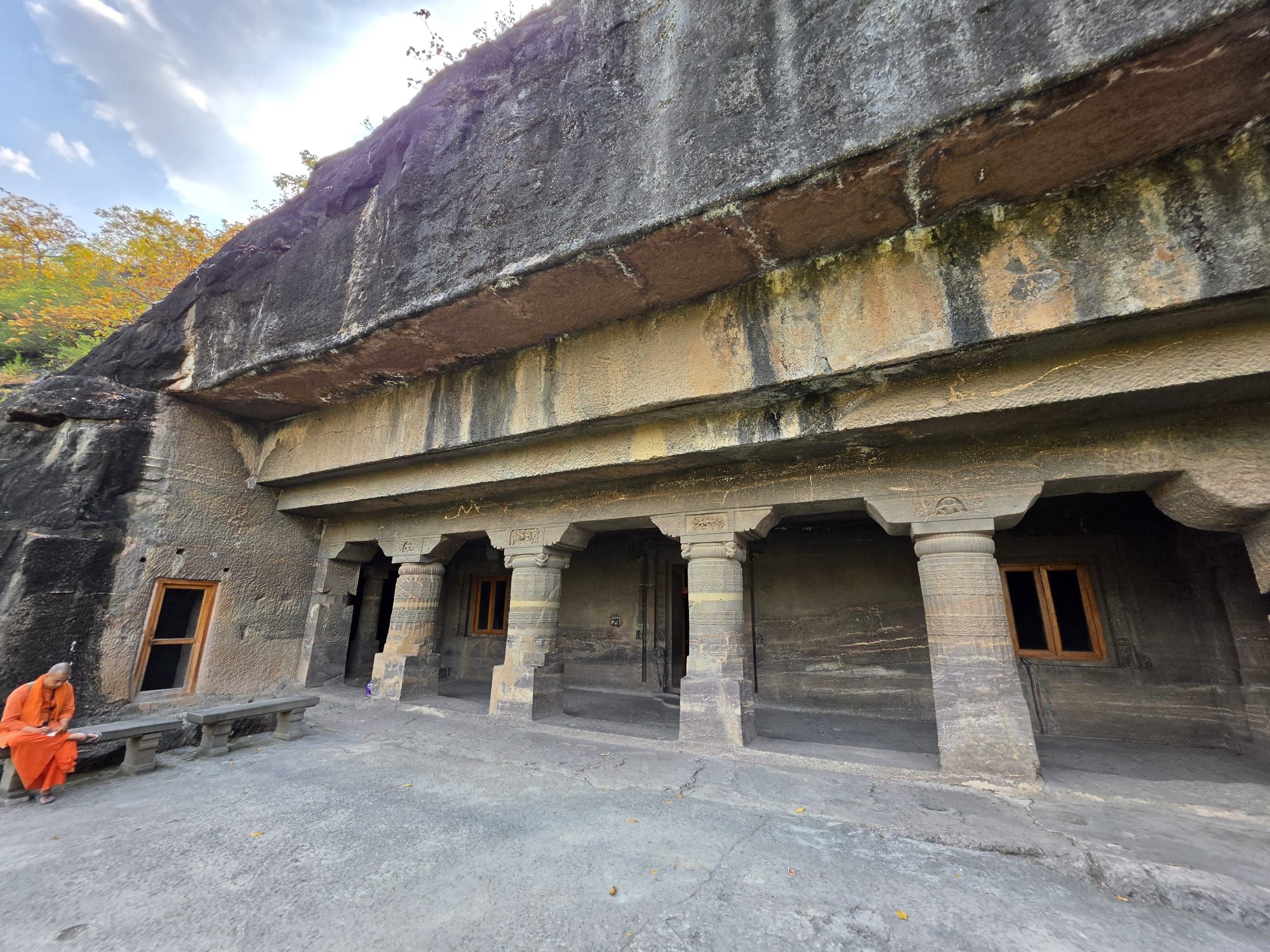
Ajanta is a group of 30 rock-cut caves, including unfinished excavations, set into a cliff above the Waghora River. UNESCO identifies five as chaityagrihas — sanctuary or prayer halls — and the remainder as viharas, or monasteries.
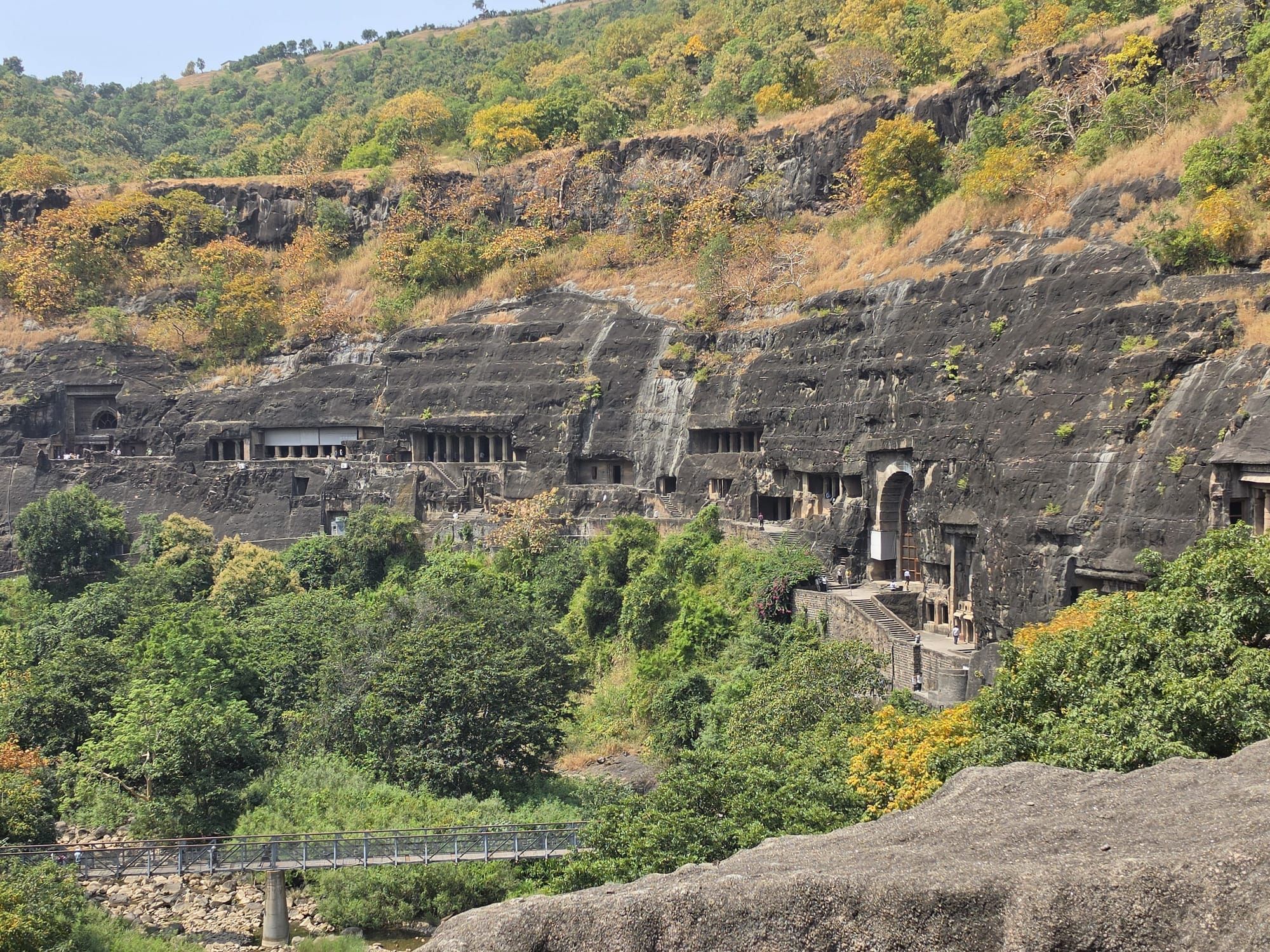
The entrances follow the curve of the ravine, so the site reads as a landscape before it reads as a list of cave numbers. Our wide photographs show that relationship clearly: dark basalt openings, a narrow visitor path and thick vegetation dropping toward the river.
The complex developed in two principal phases separated by several centuries: an early phase around the 2nd to 1st centuries BCE and a later phase in the 5th to 6th centuries CE. These dates and classifications are sourced history, not conclusions drawn from our photographs.
Sources for this section
- UNESCO World Heritage Centre — Ajanta Caves — World Heritage description, chronology, cave types, art and conservation context.
- Maharashtra Department of Tourism — Ajanta — Official state overview and visitor context; current arrangements should still be checked before travel.
How to read the caves: chaityagriha and vihara
Historical context · sourced
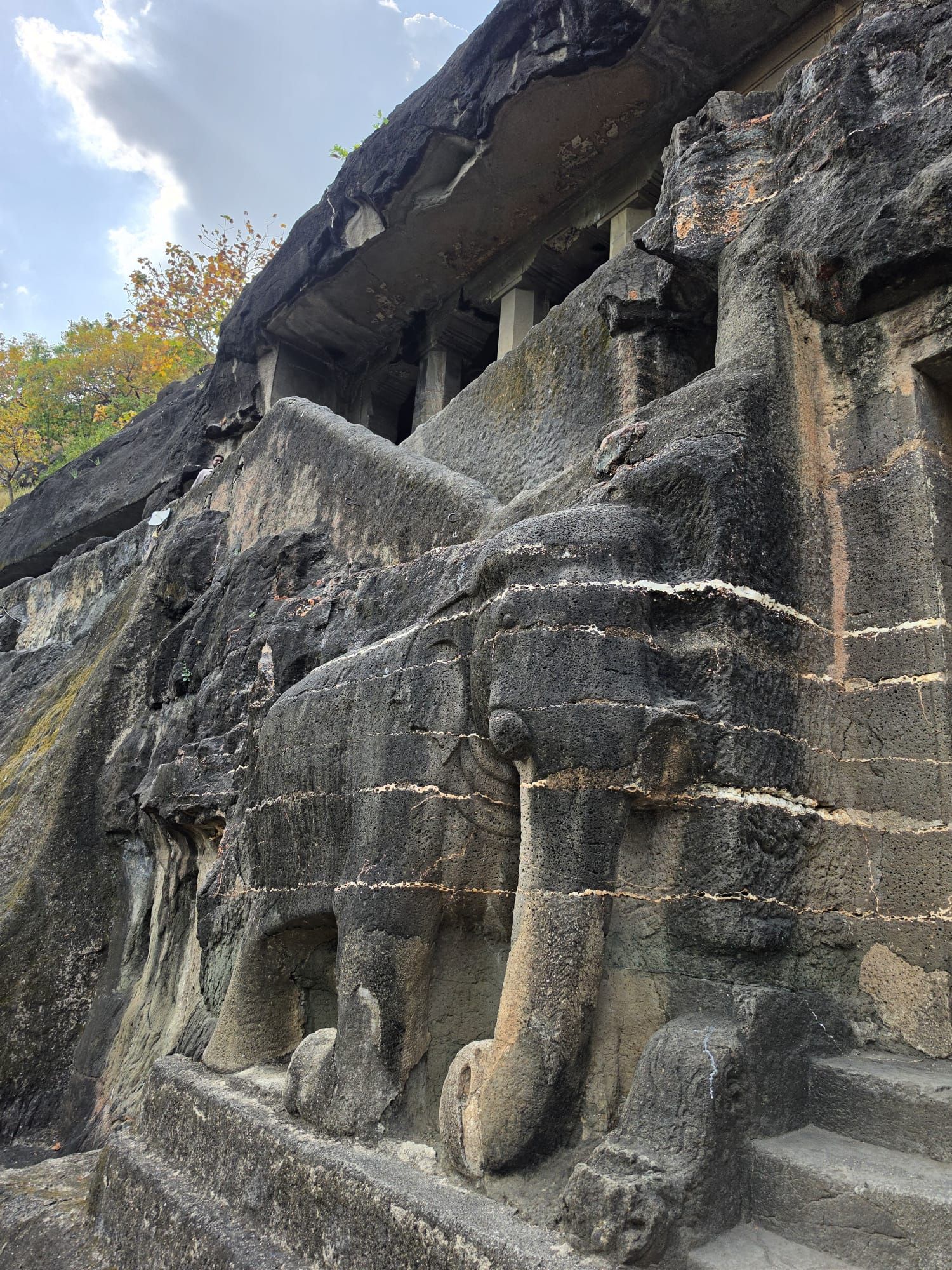
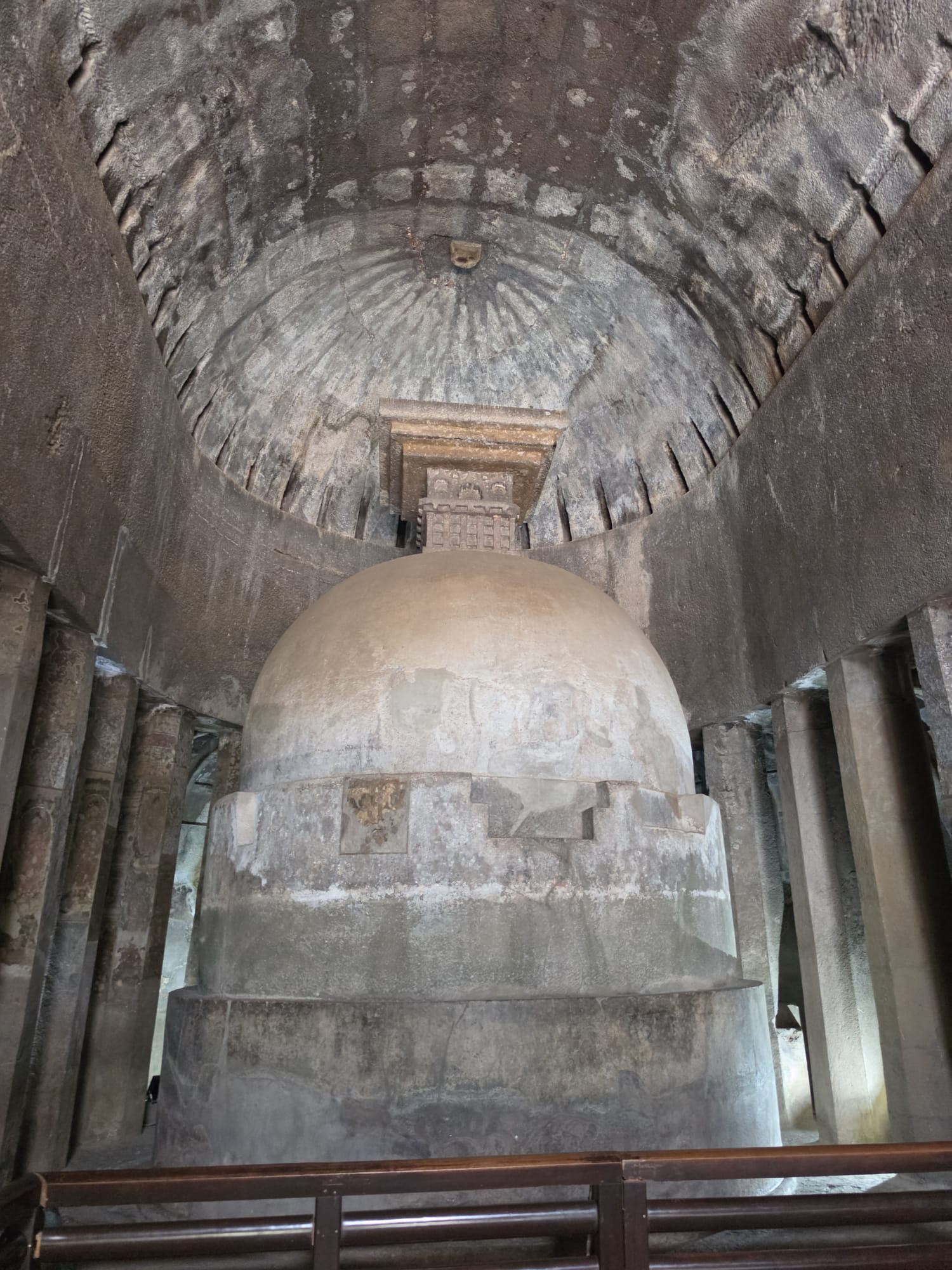
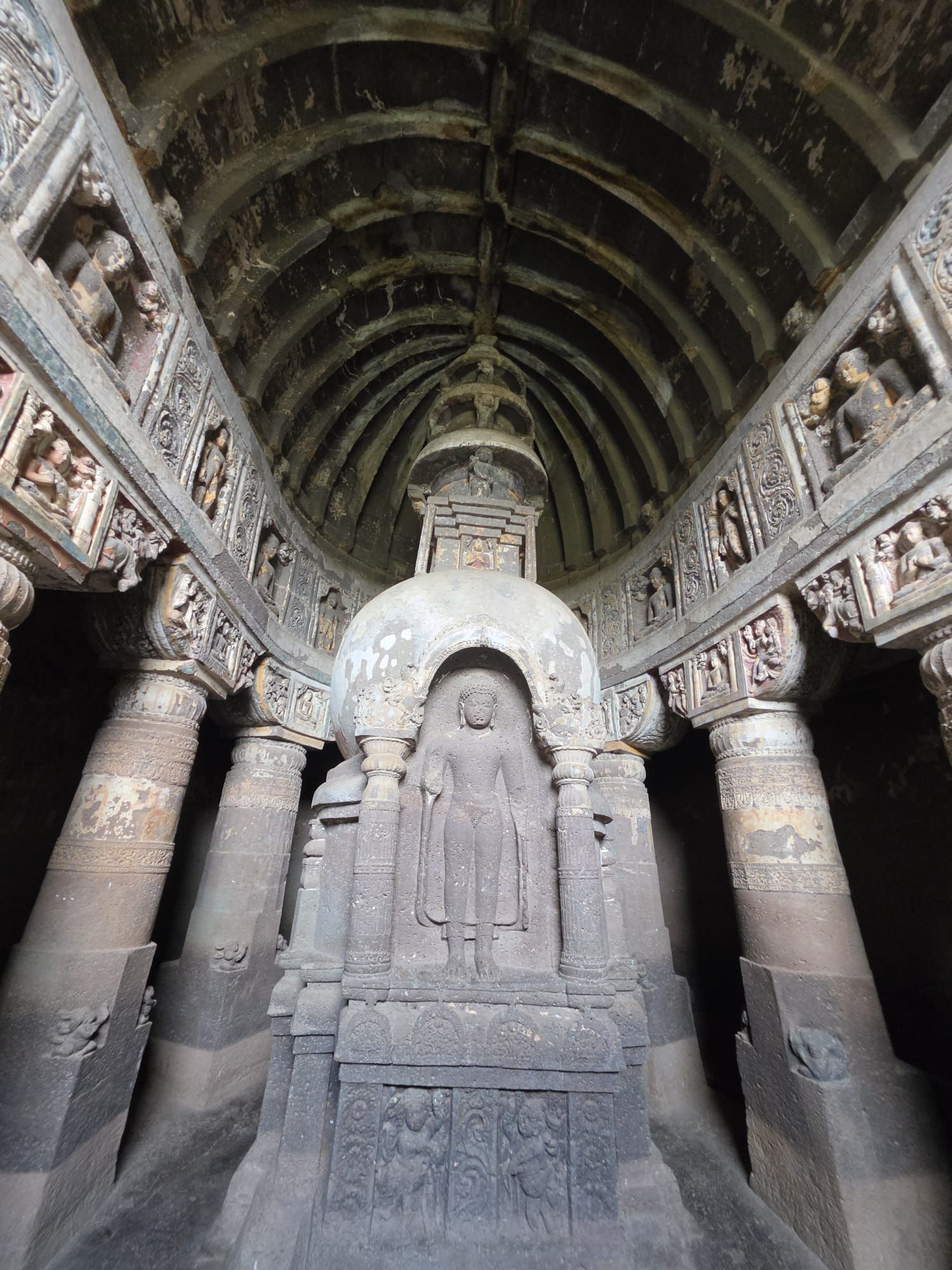
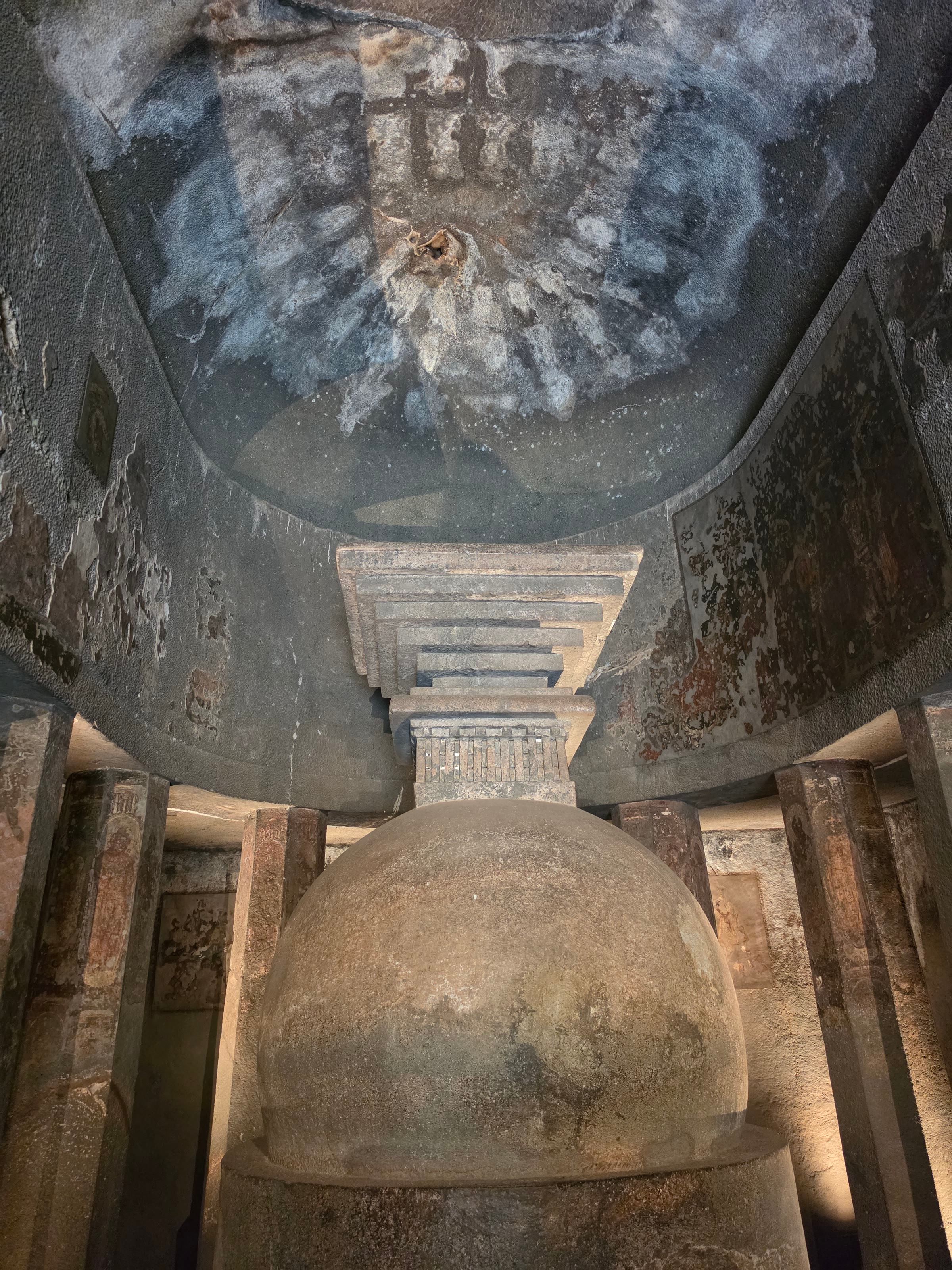
The five chaityagrihas are Caves 9, 10, 19, 26 and 29. They are sanctuary or prayer halls: a central nave leads towards an apsidal end and a rock-cut stupa, with side aisles allowing movement around it. The other caves are chiefly viharas — monastic halls with cells arranged around the sides.
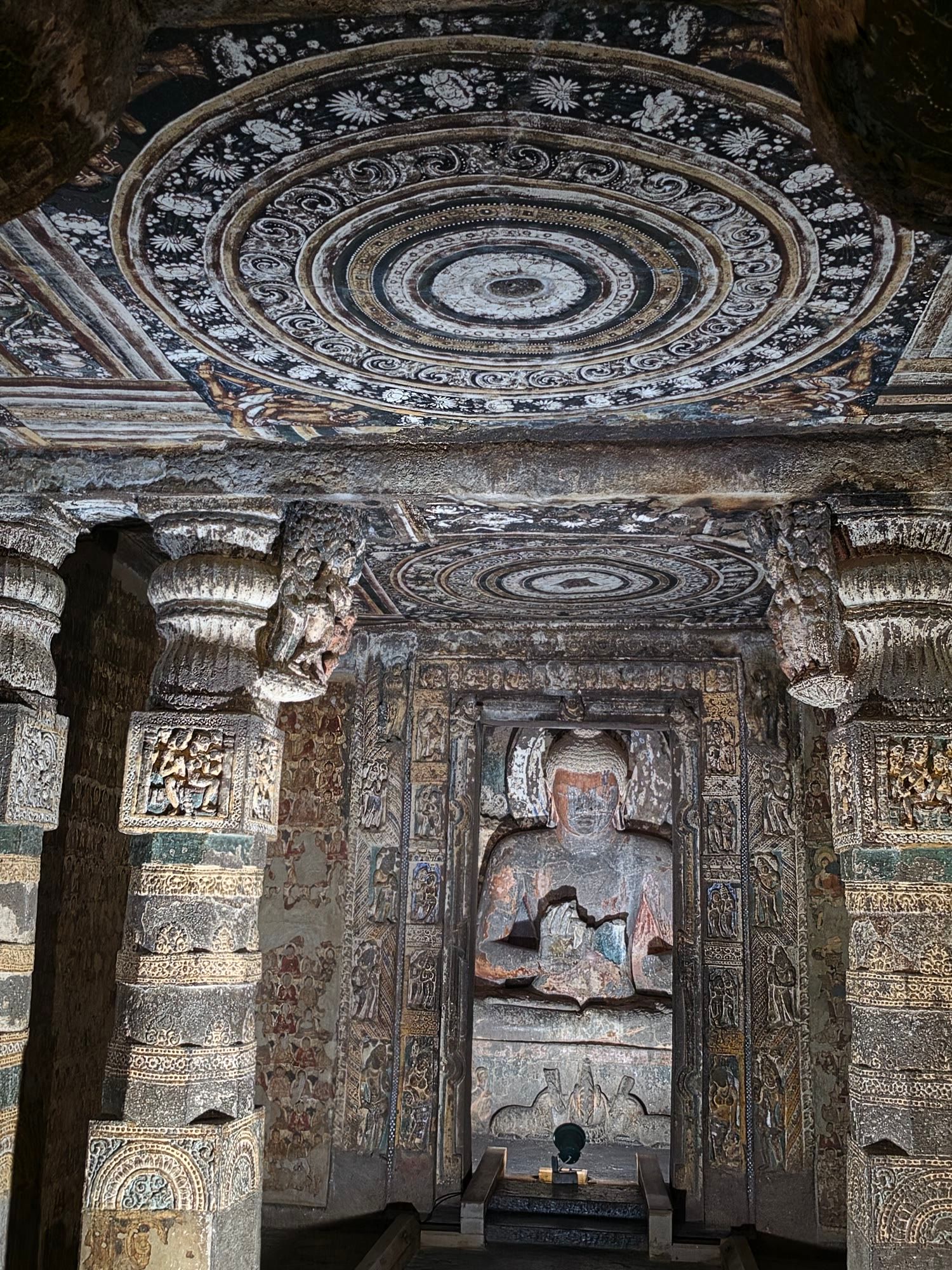
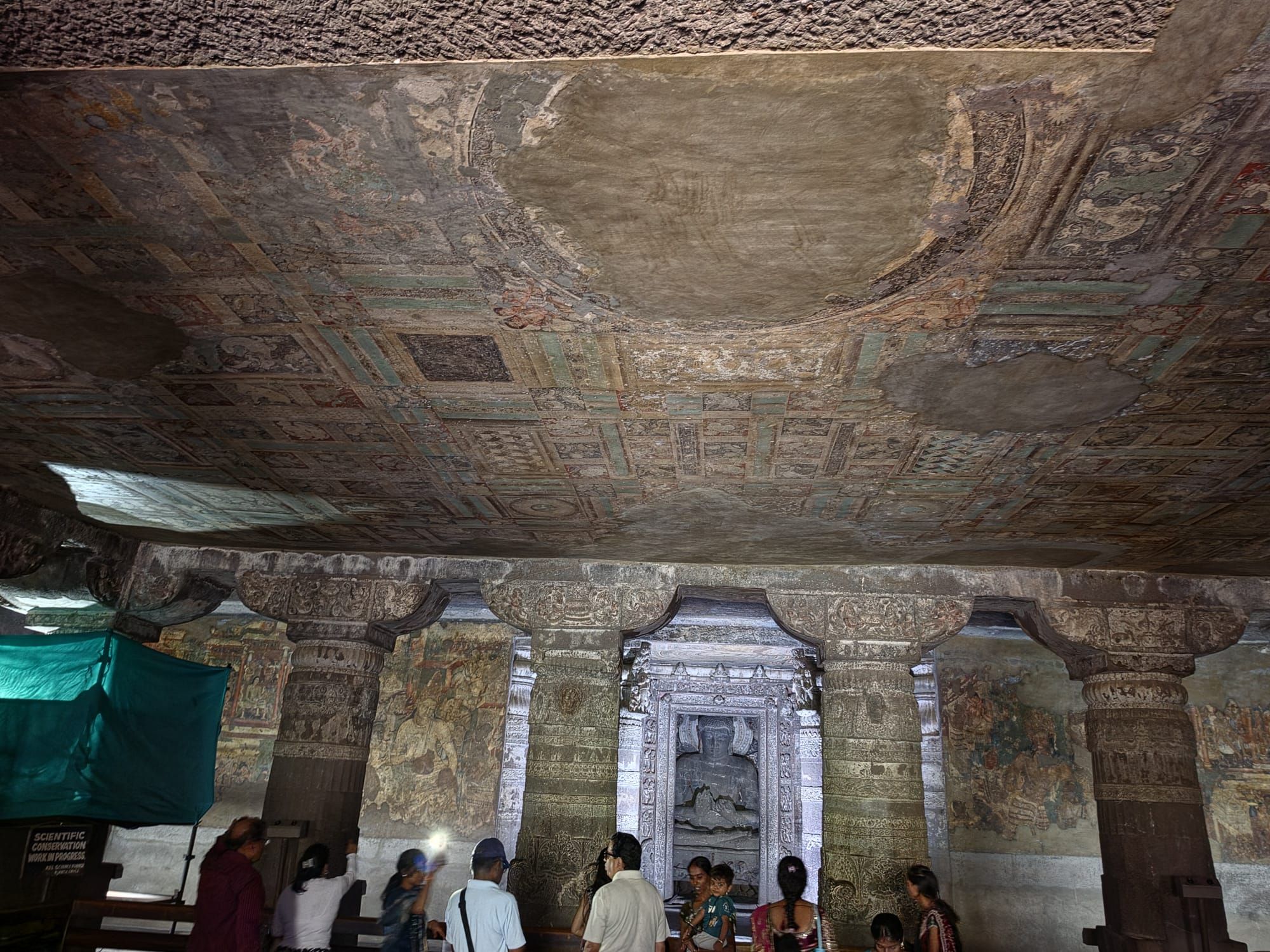
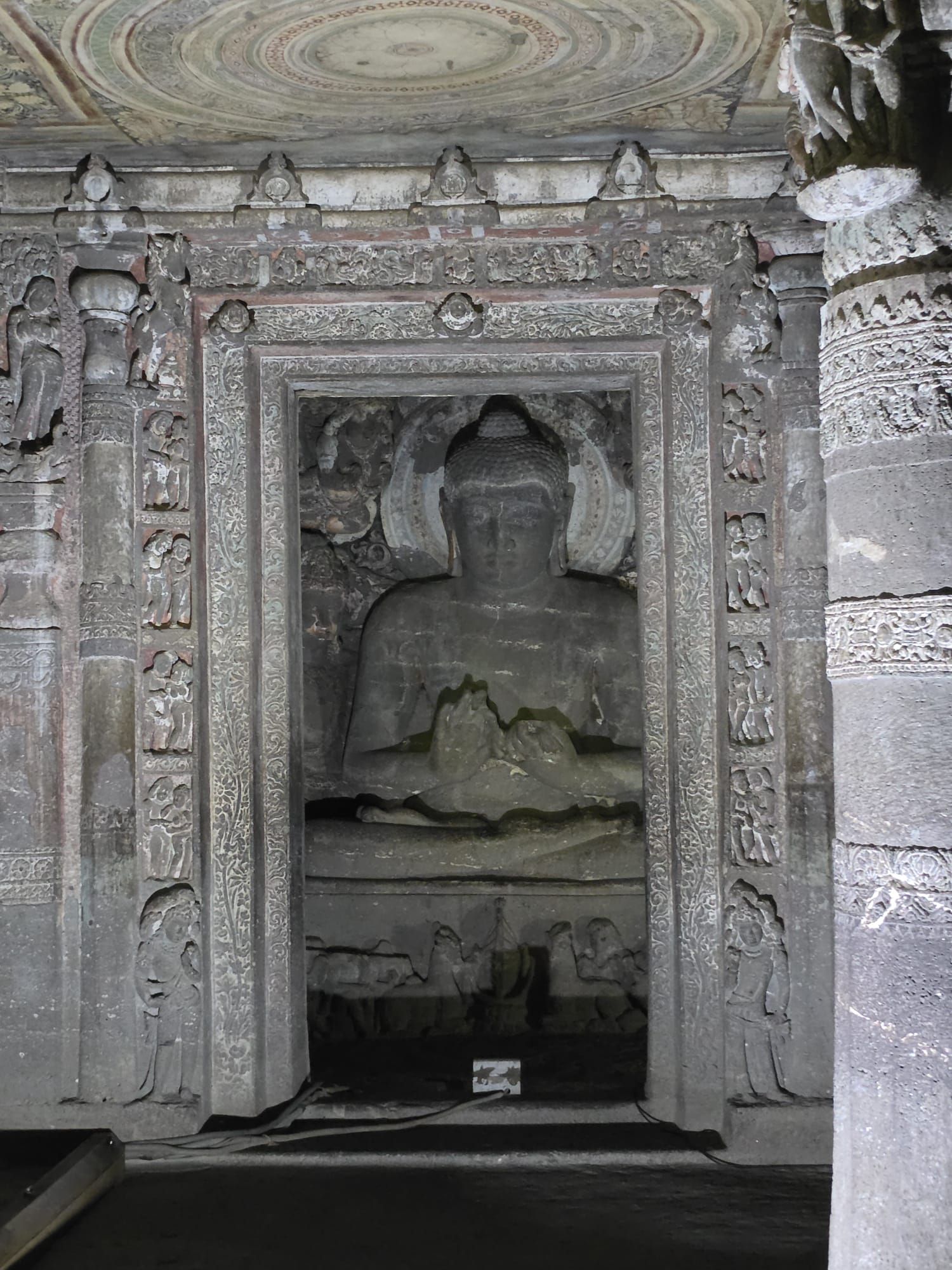
The change between the early and later phases is visible in the art. In the early caves, the stupa itself is the focus and Buddha is represented symbolically. In later caves, images of Buddha appear prominently on shrines, pillars, facades and even on the front of the stupa. Our photographs show both a plain stupa and a later, richly carved prayer-hall interior, but we do not assign cave numbers where our notes do not confirm them.
Sources for this section
- UNESCO World Heritage Centre — Ajanta Caves — World Heritage description, chronology, cave types, art and conservation context.
Painted stories, ceilings and fragile surfaces
Historical context · sourced
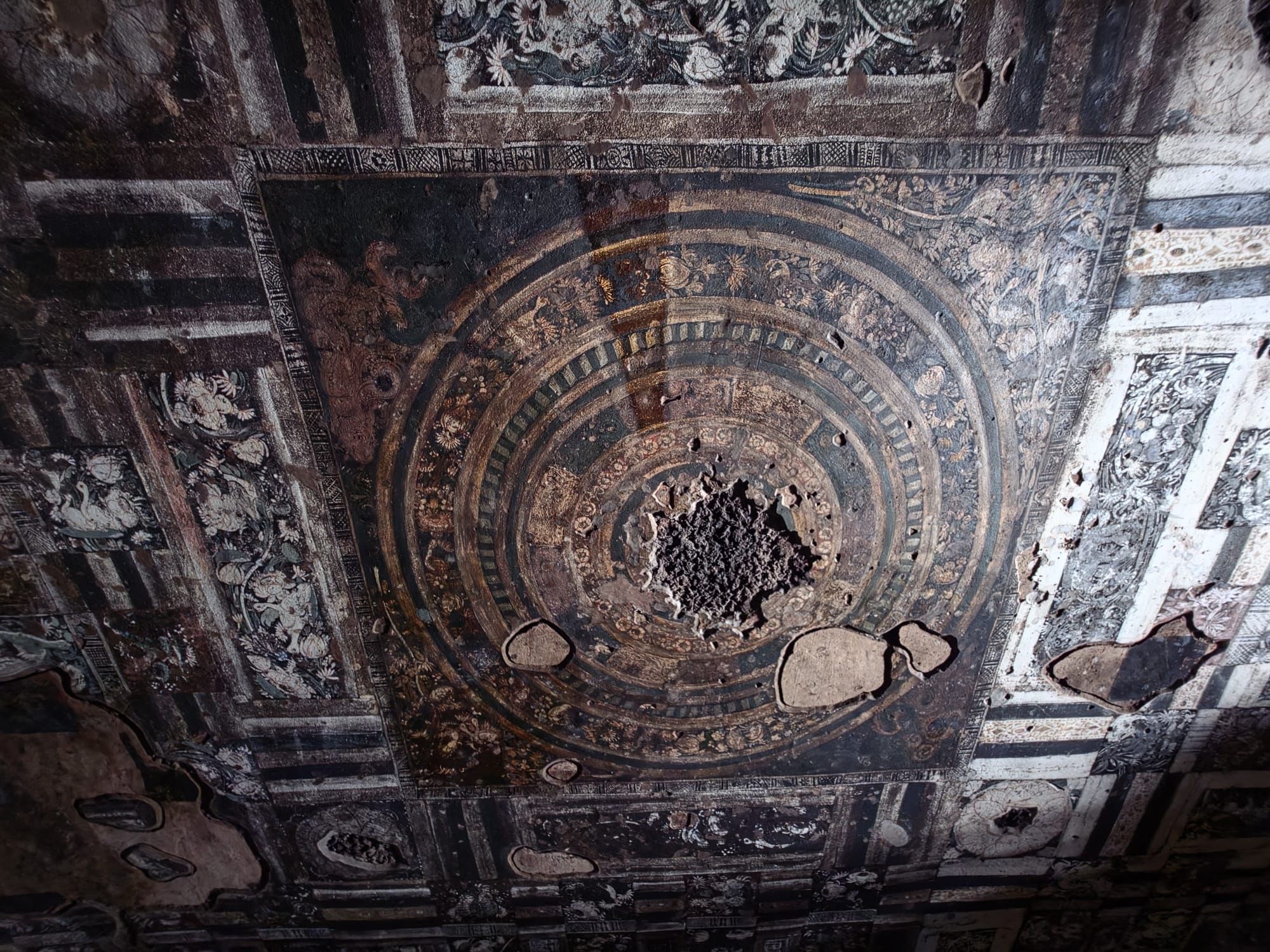
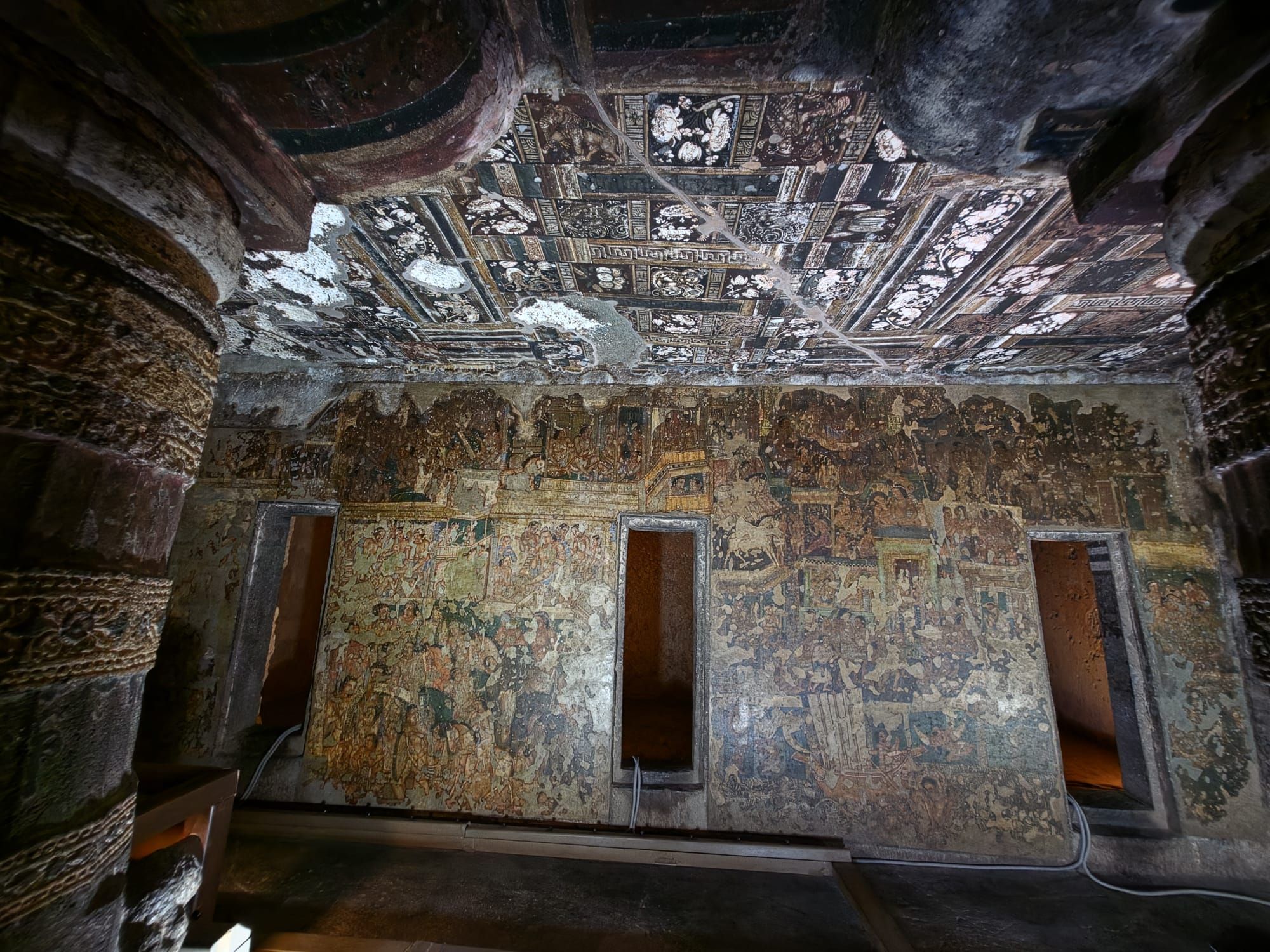
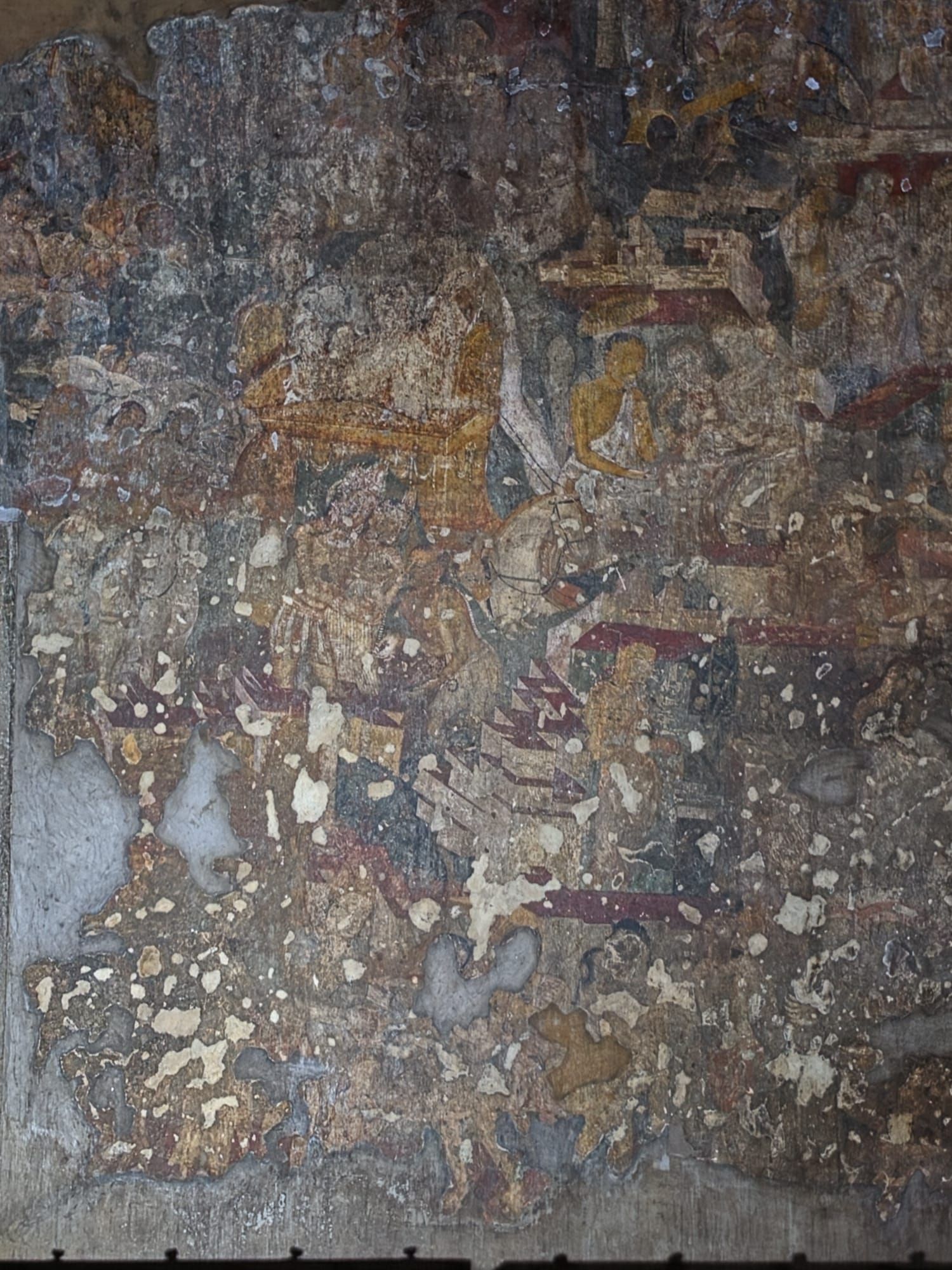
Ajanta’s murals include episodes connected with the Buddha, Bodhisattvas and Jataka stories of previous lives. The surviving decoration also extends across ceilings, pillars and architectural borders, where floral, geometric, animal and figure motifs turn whole rooms into painted environments.
The paintings are old, fragile surfaces rather than bright modern illustrations. Our photographs preserve their uneven survival: dense scenes remain legible in some areas, while losses and darkening interrupt others. That condition is part of what visitors actually see and one reason to follow every photography and conservation instruction at the site.
Sources for this section
- UNESCO World Heritage Centre — Ajanta Caves — World Heritage description, chronology, cave types, art and conservation context.
- Maharashtra Department of Tourism — Ajanta — Official state overview and visitor context; current arrangements should still be checked before travel.
Buddha images and Cave 26’s reclining figure
Historical context · sourced
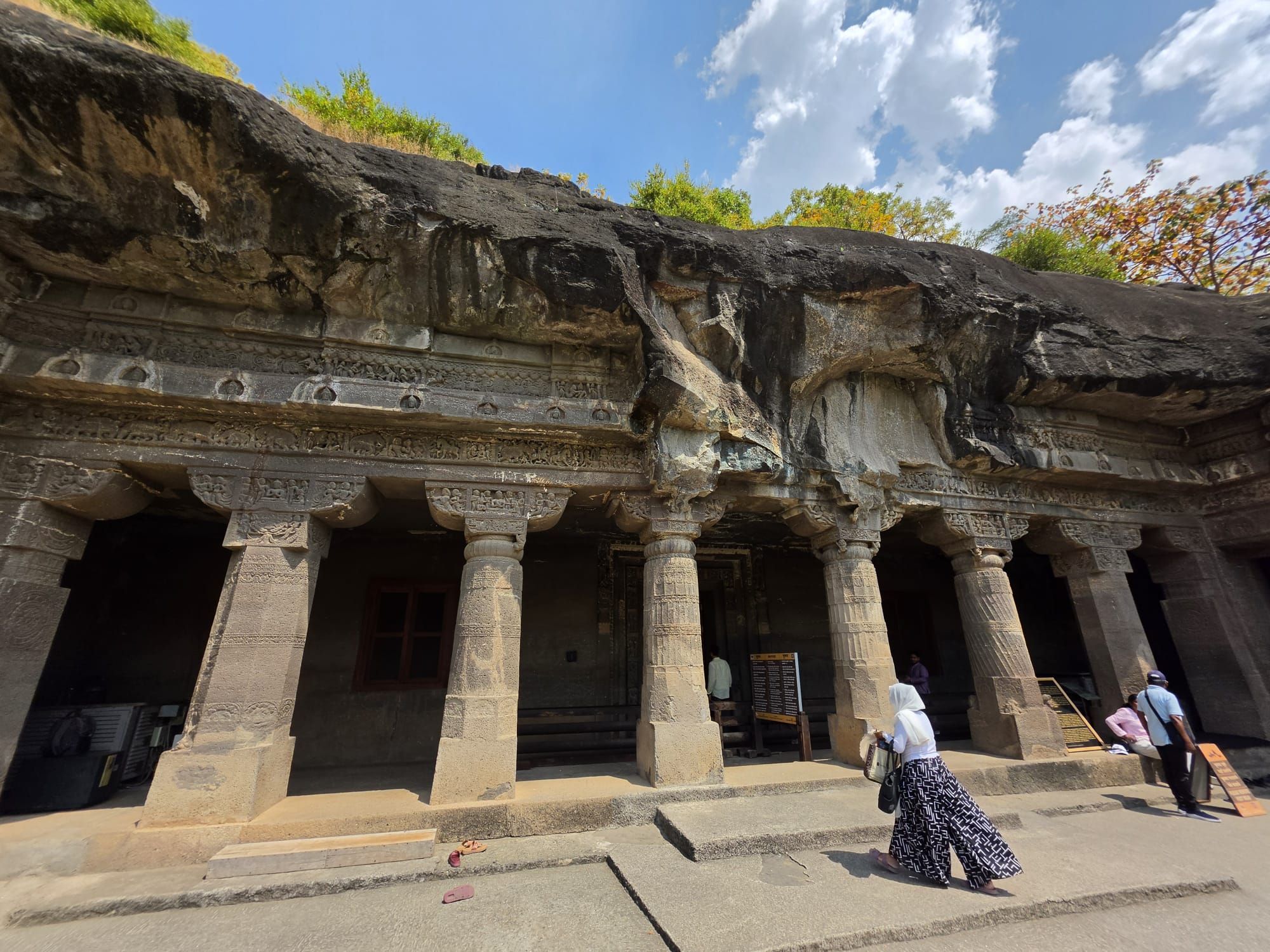
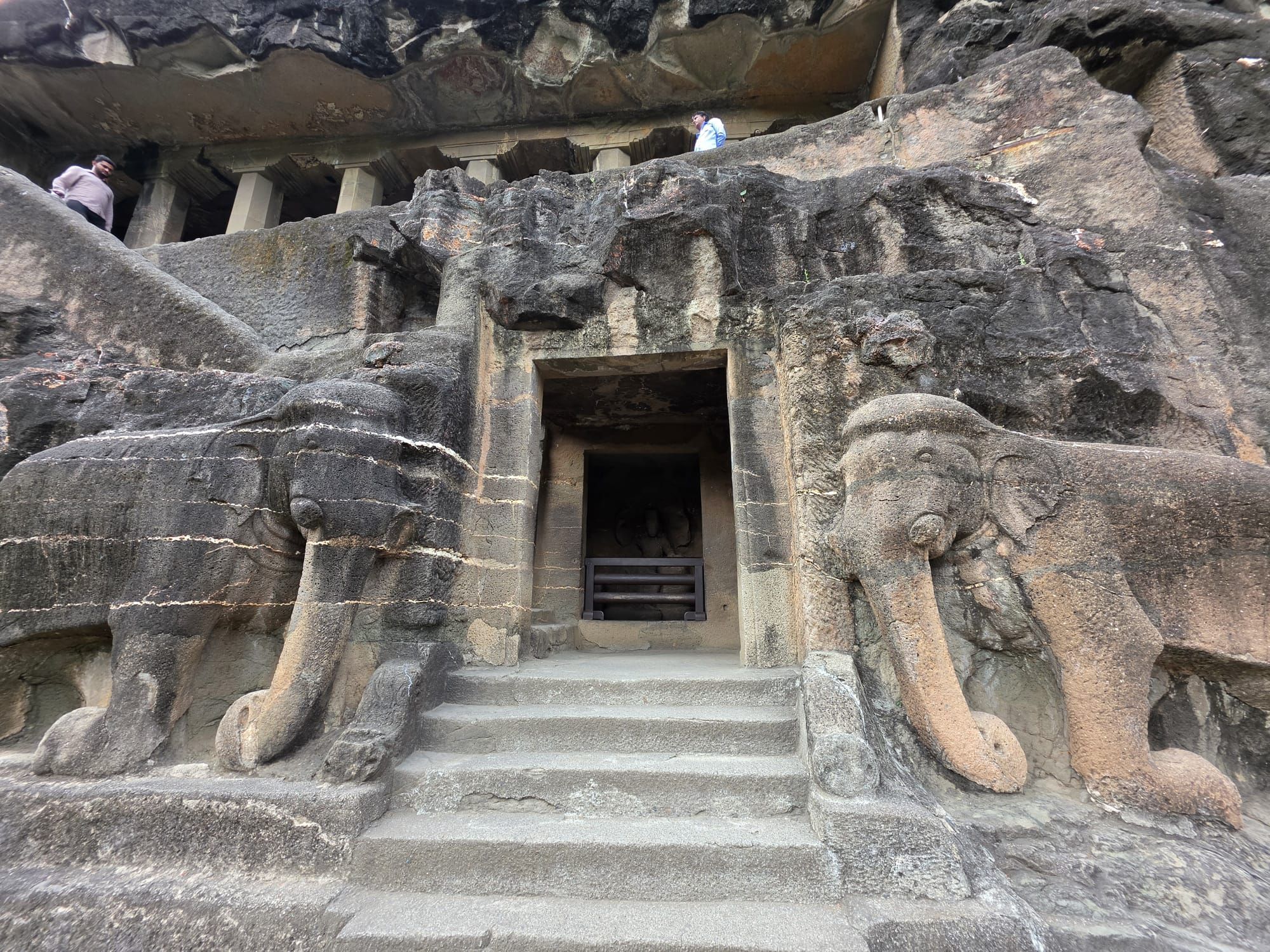
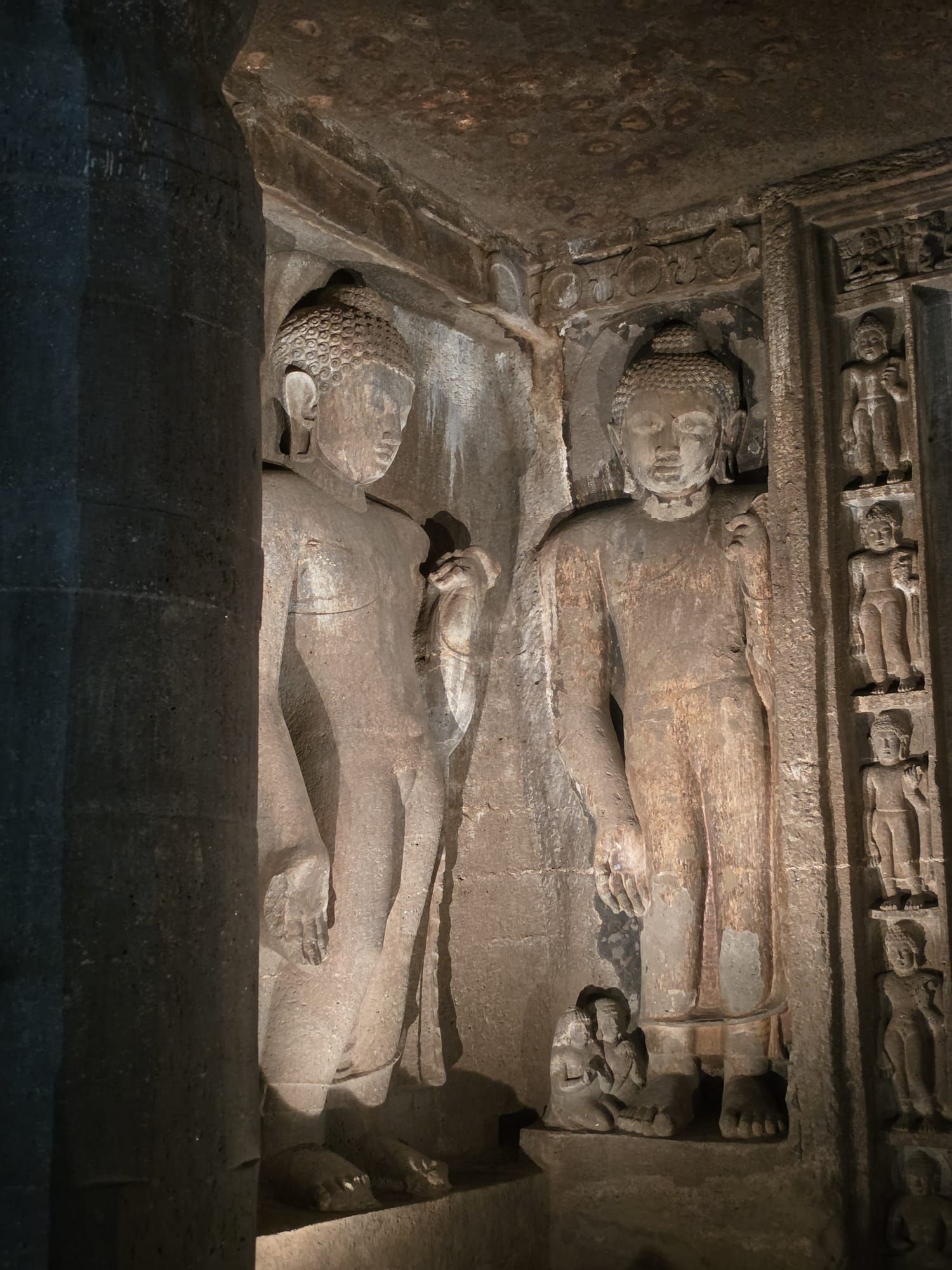
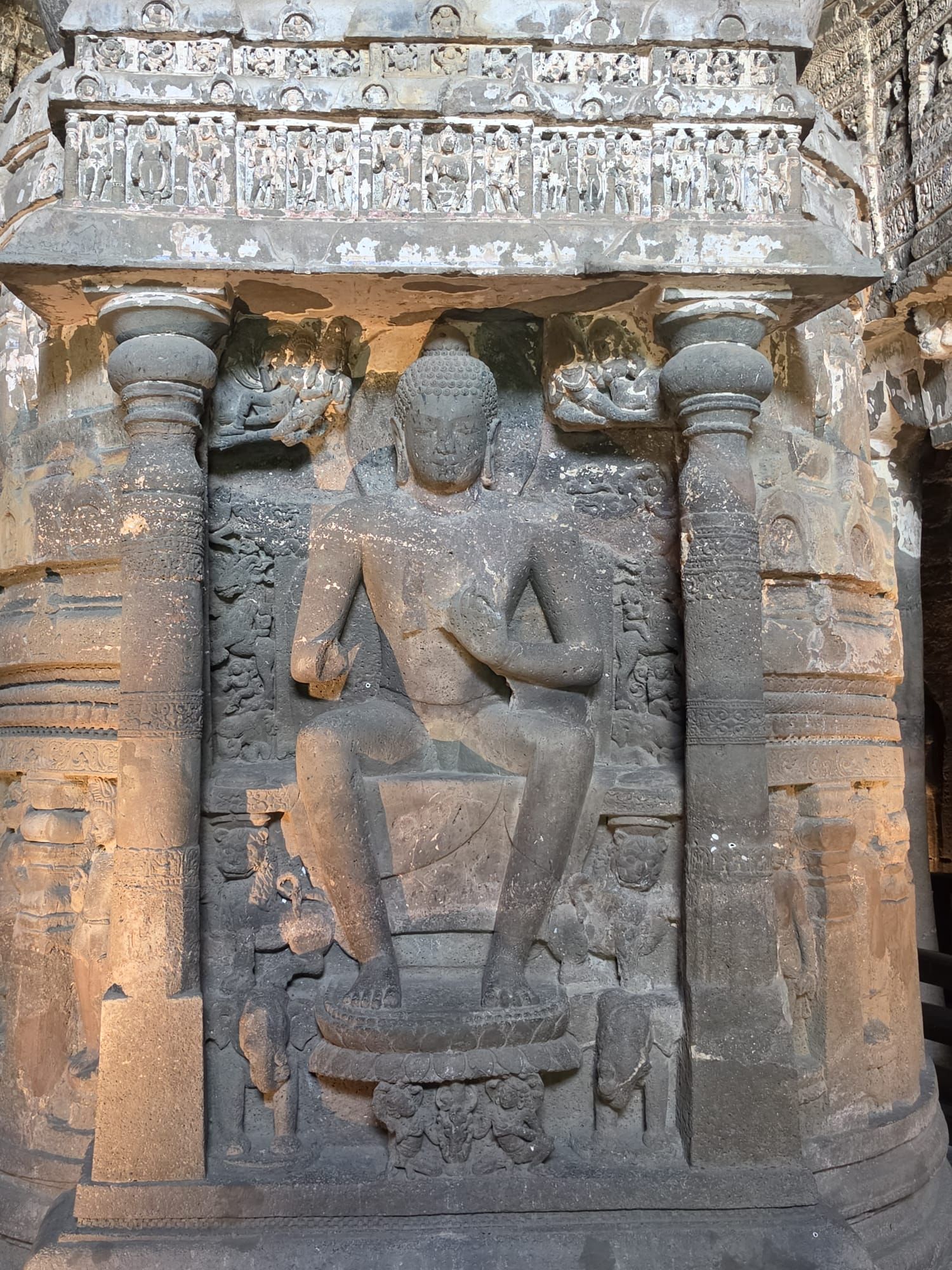
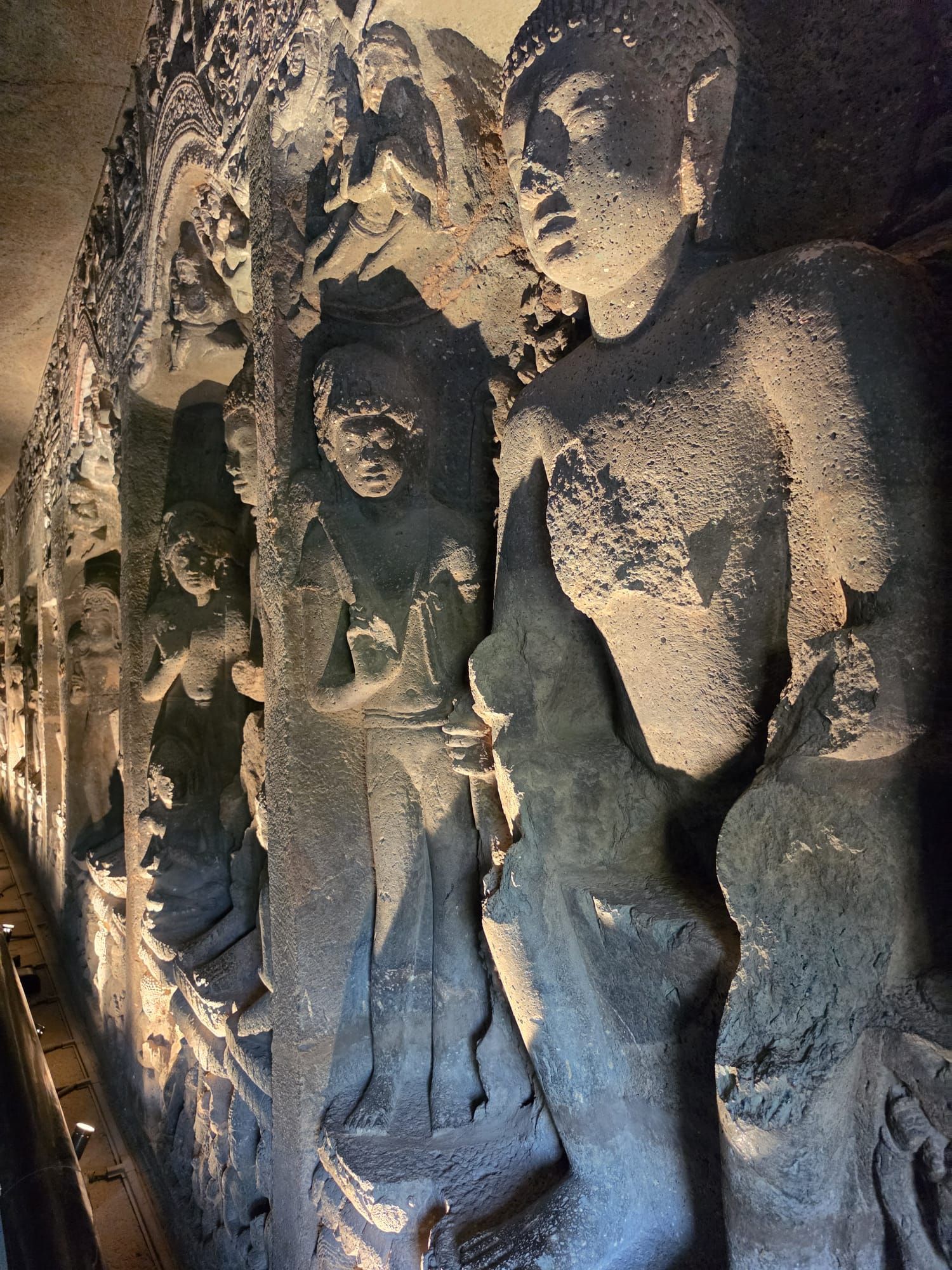
The later phase brought increasingly elaborate sculpture to facades, doorways, shrines and prayer halls. Seated and standing Buddhas appear alongside attendant figures, while carved narrative panels occupy walls and the spaces around entrances.
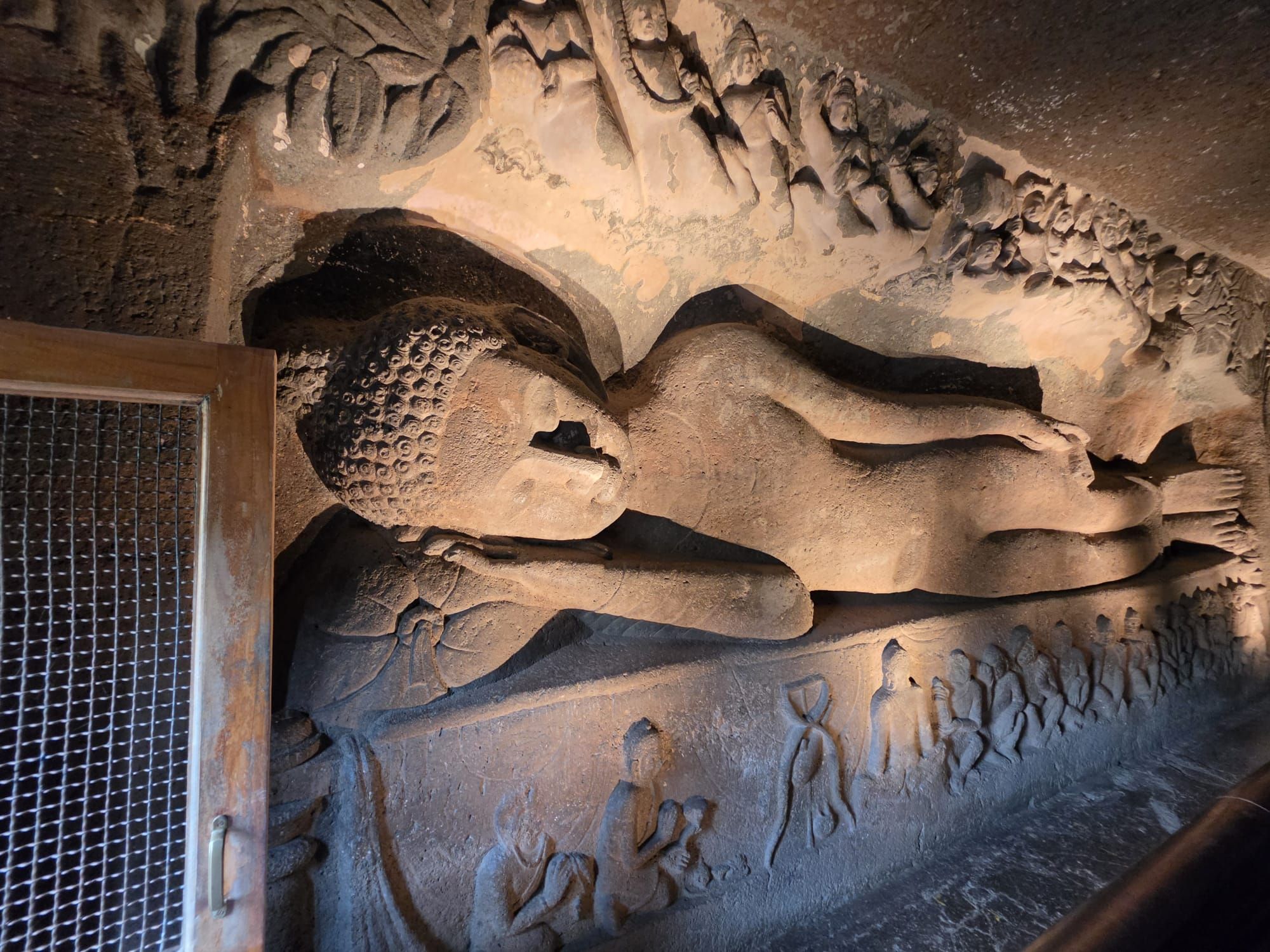
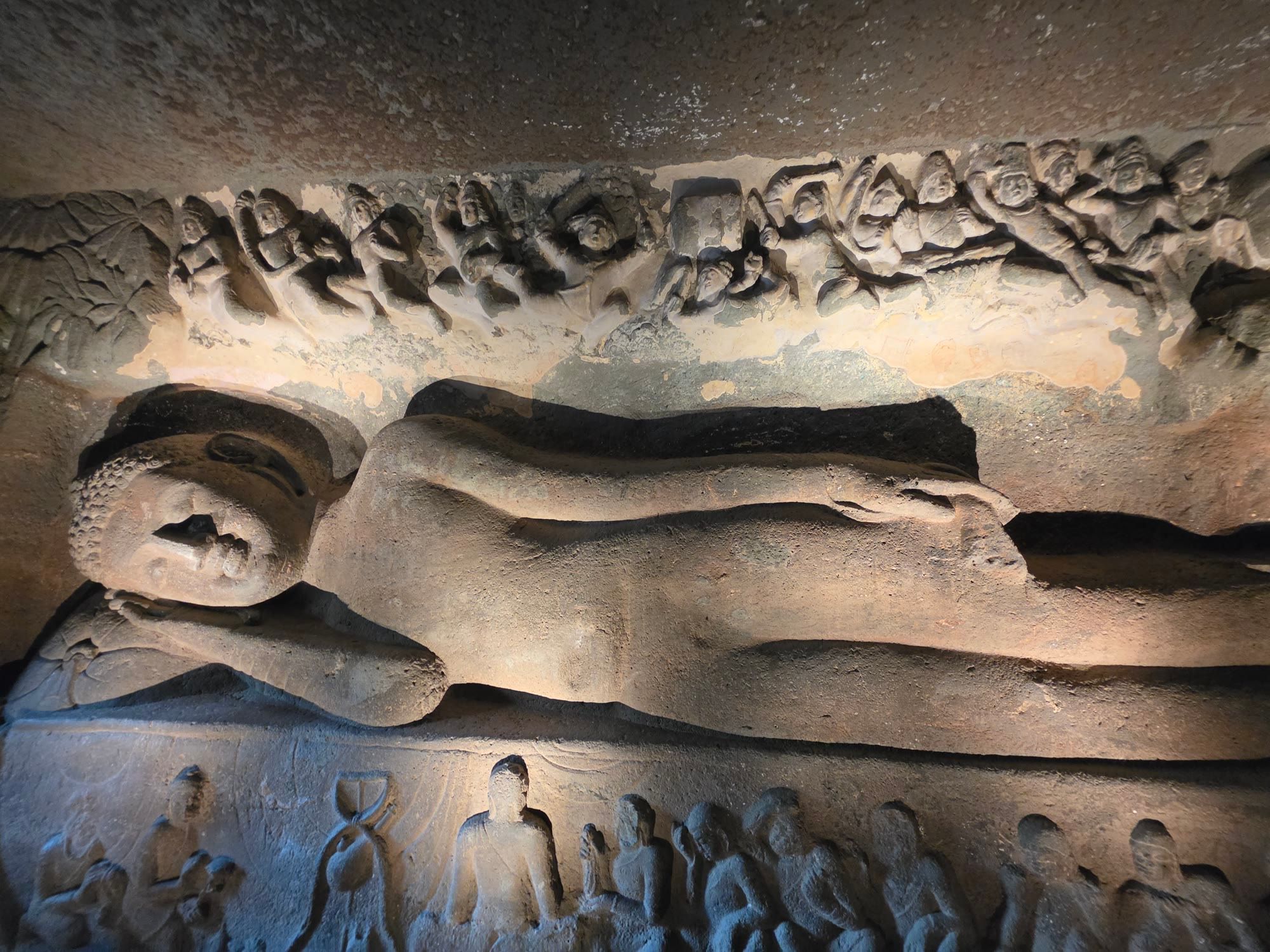
One sculpture we photographed can be identified securely: the reclining Buddha in Cave 26, representing the Buddha’s parinirvana. The supplied scanned guide also labels this figure as Cave 26. Other sculpture captions remain descriptive because our visit notes did not preserve every cave number.
Sources for this section
- UNESCO World Heritage Centre — Ajanta Caves — World Heritage description, chronology, cave types, art and conservation context.
What we actually did
First-hand journeyOur October 2026 experience
We walked the cliff-side route and entered a selection of caves rather than attempting a cave-by-cave survey. We saw painted monastery interiors, carved facades and pillars, Buddha shrines, early- and later-looking stupa halls, sculptural panels and the reclining Buddha in Cave 26.
The day moved repeatedly between bright, hot exterior paths and much darker interiors. We paused to look at ceilings as well as walls; several of the most striking patterns and surviving painted fields were overhead.
We did not record a numbered sequence for every cave. This page therefore documents what our photographs and notes establish, while leaving uncertain cave numbers unclaimed.
What we paid / observed in October 2026
First-hand journeyOur October 2026 experience
From memory, we paid or observed approximately ₹45 per adult at the parking / entry stage and about ₹30 per person for the shuttle bus, with a few additional small fees along the way. These are our October 2026 recollections, not a complete fee breakdown or current prices.
We cannot confidently separate every fee into an official category from memory. These recollections are not a current ticket guide, and we have not added them into a claimed total cost.