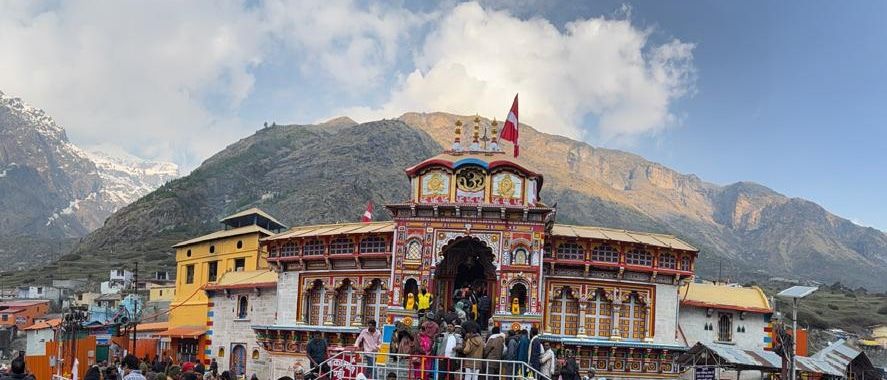
We reached Badrinath by road, had general darshan that evening and attended a separate ticketed Abhishek the following morning.
Our base
New Urvashi in Badrinath, followed by Harela Inn in Pipalkoti the next night.
Our morning start
We woke around 03:30–04:00 for the Abhishek.
Ritual duration
Approximately 1.5–2 hours for the experience we attended, as remembered from April 2026.
What followed
Brahma Kapal and Mana, then the drive to Pipalkoti.
Could we take phones into Badrinath and where did we leave shoes?
We carried phones and could take courtyard photographs during our April 2026 visit, but photographs of Badrinarayan were not allowed. There were footwear-storage places, including at a shop where we bought prasad. We did not use or notice a phone locker. These are our observations, not a guarantee of today’s arrangements.
How do I book an Abhishek at Badrinath?
Start with BKTC’s official puja-booking service. Check the chosen ritual, whether attendance is included, available date, participant limit and reporting time before paying. Keep the confirmation and reconfirm arrival instructions with the temple. Our early-morning experience describes the ticket we used in April 2026; another puja may have different timing or arrangements.
The 1.5–2 hours in our account refers to the ticketed morning Abhishek, not an ordinary darshan queue. We also had general darshan the previous evening, but did not record that queue’s duration. Separate waiting, the ritual itself and your other visits when planning the day.
Can I visit Mana after Badrinath?
We visited Mana after our morning rituals, then continued to Pipalkoti. It added walking after a very early start. With children or a slower group, choose how much you want to cover and check current Mana access before relying on the same sequence.
We arrived in the evening after a long day of temple stops from Sitapur, checked in at New Urvashi and had general darshan that night.
Very early the next morning we attended a ticketed Abhishek and saw the deity’s morning abhishek and preparation. We visited Tapt Kund and the temple complex shrines, and performed Pitru Puja at Brahma Kapal.
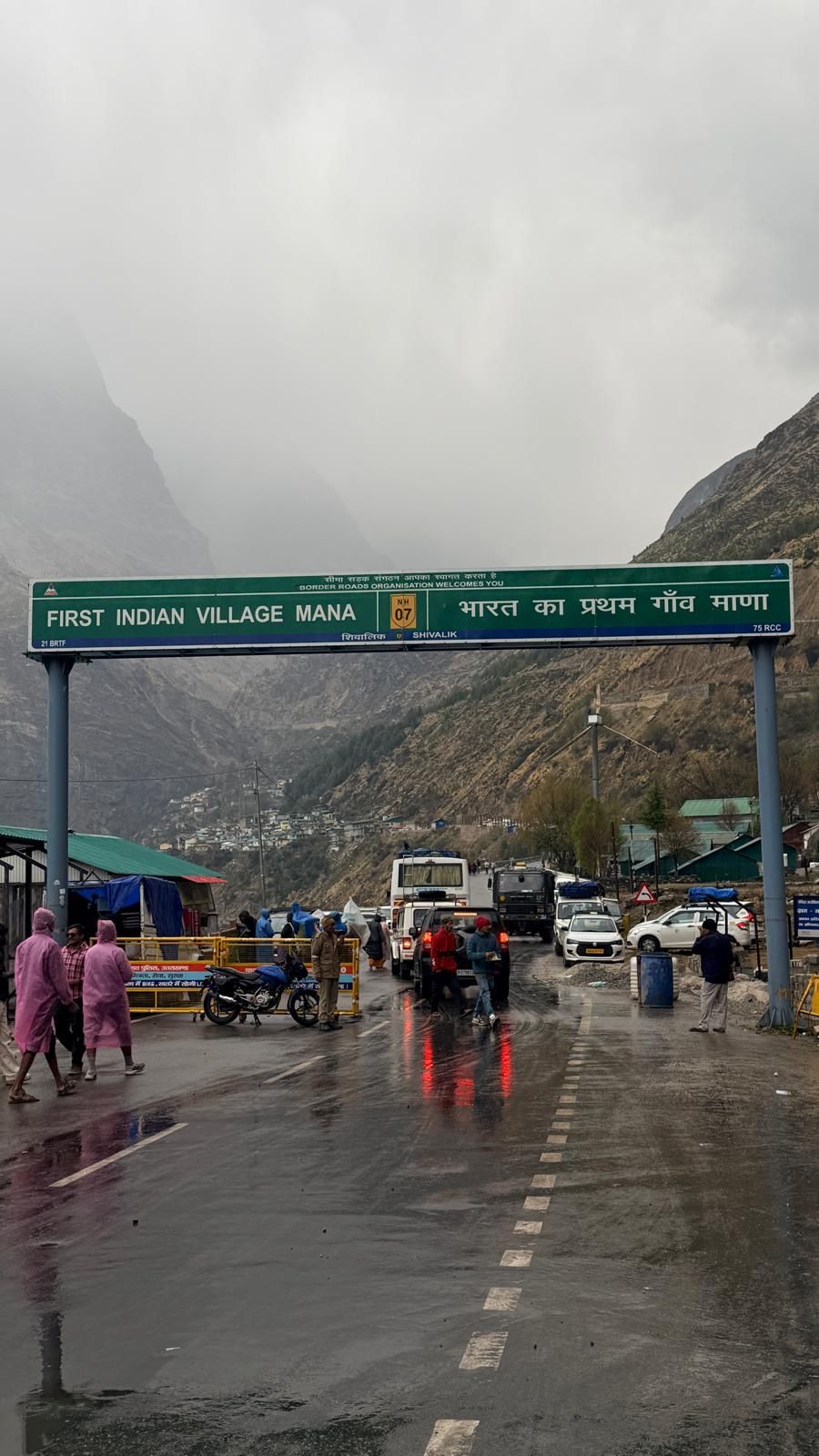
Then we went to Mana, where we saw Vyas Gufa, Ganesh Gufa, the Saraswati River and temple area, and Bhim Pul, before driving down to Pipalkoti.
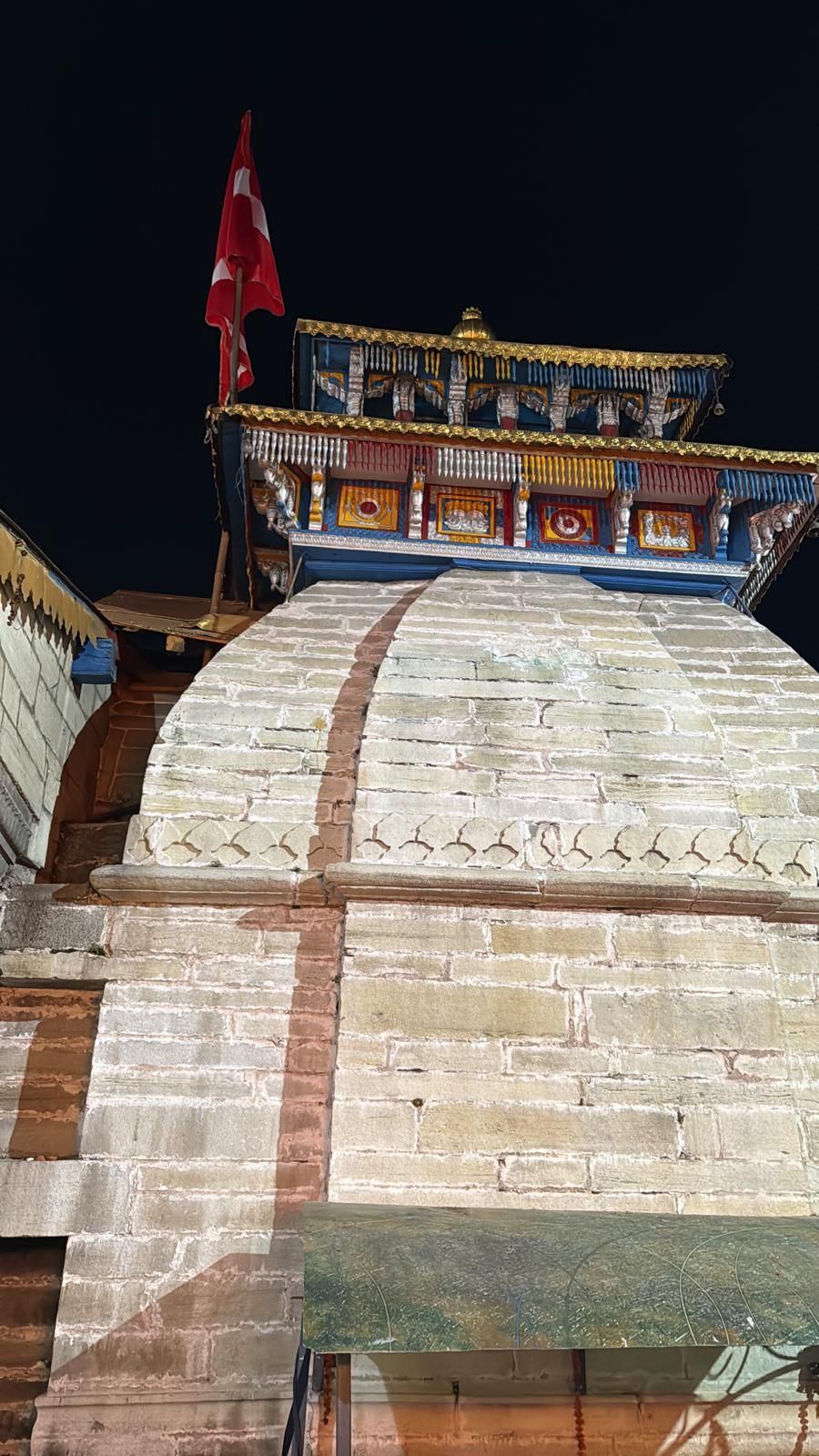
The temple roof at night.The road gateway at Mana.
Getting there
We did thisFirst-hand experience, April 2026
How we did it
We drove from our base in the Sitapur area in a single day, via Kalimath, Ukhimath, Chopta, Gopeshwar, Joshimath and Hanuman Chatti. It was a full day on the road.
We visited Mana the next morning, after the rituals at Badrinath.
What surprised us
We did thisFirst-hand experience, April 2026
How early the Abhishek meant waking up: at around 3:30–4:00 AM (approximate).
During the Abhishek we were able to see Badrinarayan before the normal daytime shringar was complete.
How long it lasted: roughly 1.5–2 hours in all, as we remember it.
Tapt Kund felt noticeably hotter to us than the hot spring we had experienced at Yamunotri.
How much construction activity was visible around Badrinath during our April 2026 visit.
How much Mana added. Going on there afterwards made the day far richer than visiting the temple alone.
With children
What to carry
Rituals and experiences we took part in
These are what our family chose to do in April 2026, not requirements. Practices vary, and your priest or temple staff are the right people to ask.
General darshanOn the evening we arrived.
Early-morning Abhishek (ticketed)We watched the deity’s morning abhishek and preparation, before the daytime shringar was complete.
Vishnu Sahasranama and Vedic chantingAs we remember it, chanting accompanied the Abhishek.
Tulsi and prasadReceived afterwards.
Tapt KundBelow the temple. It felt noticeably hotter to us than the spring at Yamunotri.
Pitru Puja at Brahma KapalA ritual for our ancestors.
Mana: Vyas Gufa, Ganesh Gufa, the Saraswati area and Bhim PulVisited the same morning, after the rituals at Badrinath.